Feature
From scattered assets to scaled output: the rise of district-scale mining
As larger, high-grade mineral deposits become harder to find and more CapEx-intensive to develop, junior miners are opting for a district-scale, hub and spoke approach. Heidi Vella finds out more.
District-scale mining is an exploration and development approach that views mineral systems on a large, regional scale. Photo by Harvepino/iStock / Getty Images Plus via Getty Images
“There is an old truth in mining,” says José García, CEO of Canadian-based Silver X Mining Corp, “that the best place to find a new mine is where an old one once existed – our district approach puts that principle to work at scale.”
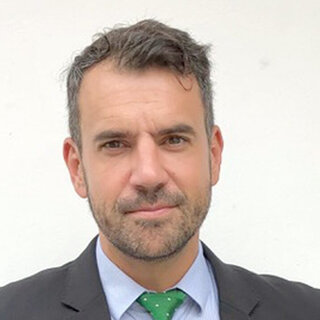
José García, CEO of Canadian-based Silver X Mining Corp. Credit: Silver X
Operating out of Peru’s Huachocolpa mining district, Silver X is one of several junior mining companies pursuing profit and growth through a district-scale, hub and spoke production model rather than, as is more conventional, a single large deposit.
Silver X’s approach is part of a wider trend among junior mining companies, which as a group accounted for 77% of Western world discoveries in 2023. It is driven by factors such as a decline in large scale, commercially viable mining deposits, rising exploration costs – which are on average more than twice pre-2005 levels – and price spikes for in-demand commodities such as copper, gold and silver.
Utilising scattered assets
District-scale mining is an exploration and development approach that views mineral systems on a large, regional scale. The goal is to discover multiple deposits from the same mineralised district or region, often encompassing historical mines, and service each from one central processing hub. It echoes back to government stamp mills or state batteries in Australia, and more recently, has proven to be a profitable strategy for the likes of Swedish-based Boliden.
Simon Jowitt, director of the Nevada Bureau of Mines and Geology at the University of Nevada, Reno, says the industry is seeing renewed and growing interest in this approach as miners start to recognise the potential of scattered assets in prospective mining districts.
“One of the main challenges in any mining operation is the capital cost of construction and development of a processing plant,” he explains. “With district mining, you can start to feed the processing plant quicker with resources from small deposits that are faster to develop. This can help companies get over the initial challenge of outlaying capital expenditure [CapEx] but not receiving any income for long lead times.”
It is a strategy that, with gold prices hitting record highs, has particularly strong potential in Nevada. In the state, many operations are looking to mine gold oxide mineralisation and process it locally, says Jowitt. They include i-80 Gold, which has several projects that will feed into an existing processing plant the company has acquired, and nearby Fortitude Gold, which in preparation for the winding down of its active gold mine, Isabella Pearl, is developing an adjacent satellite deposit. The crushed material will be trucked to Isabella Pearl for processing.
“For the satellite deposit, they are using exactly the same processing approach and plant because the mineralisation is nearly identical,” explains Jowitt.
As the price of silver also skyrockets to 13-year highs, Silver X is similarly betting big on its district-scale Nueva Recuperada operation in Peru. The company has 230 mining concessions comprising silver-gold along with lead-zinc-copper mineralisations across 20,472 fully permitted hectares which surround Endeavour Silver’s recently acquired Kolpa project.
The company has identified three major high-grade silver mining units: the already-producing Tangana, as well as Plata and Red Silver – all in a historic mining area with more than two million tonnes (mt) containing over 35 million silver-equivalent ounces, according to the company. The latter are currently advancing towards development, with full-scale production expected toward 2028.
Silver X also recently secured a $2m (C$2.75m) loan from commodities trading giant Trafigura to support its expansion in Peru.
The plan is for the three units to feed two processing plants, one already in operation, each with a capacity for approximately 1,500 tonnes per day. At full scale, the integrated district would support annual production in the range of 6–8 million silver-equivalent ounces, positioning Silver X as one of the leading primary silver producers in Peru, says García.
“District mining allows us to scale production through modular, repeatable units, as opposed to betting the entire company on a single large deposit,” García explains. “Rather than waiting 12–15 years for one large project to go from discovery to production, we develop smaller mines in two to four-year cycles, each leveraging the same plant, permitting base and workforce.”
García adds that the district model can be cheaper per tonne of installed capacity because it avoids duplication for the processing plant, tailings and support infrastructure. “In addition, if one ore body underperforms, others in the district can compensate,” he says.
Crossing borders to facilitate district-scale mining
Elsewhere, in the chillier climes of Norway and Swedish Lapland, Bluelake Mineral is developing a cross-border district-scale mining project for multiple copper and zinc deposits. It consists of three main deposits across Swedish Levi and Stekenjokk, where Boliden mined in the 1970s and 1980s, and the Norwegian Jomafälten (Joma). Across these, and several smaller deposits, there is mineralisation for an estimated 15 - 20 years of production.
Company CEO Peter Hjorth says that, individually, the deposits are sub-scale but together offer an “economically meaningful” total tonnage that can be efficiently developed through a centralised operation.
“As major new mineral discoveries have become extremely rare, and as prices for critical metals such as copper continue to rise, I see a clear economic rationale for bundling several smaller mineralisations within the same geographic area,” he says.
The central process plant is the key, he adds. “It must not be sub-scale; instead, it must serve as a well-dimensioned hub capable of unlocking the combined value of the surrounding deposits.”
The deposits will all be within driving distance of a central processing hub in Joma. The plan is for the plant, with up to 1mt per year of capacity, to operate starting with two deposits, gradually ramping up to six. Bluelake has raised $10m so far but needs a further $100m, or more, 40% to 50% of which will be for building the process plant.
Hjorth and his team are aiming to bring the project online in four to five years. Currently, the deposits are in the environmental permitting stage, which he says could be secured within three years.
Execution and delivery
The hub and spoke approach, while offering some advantages, also has its challenges.
One is ensuring that the feedstock reacts in the same way when feeding multiple deposits into a single processing plant.
“Even if a deposit is the same mineral type, system or deposit as another, the material will be slightly or significantly different in one way or another – there is always going to be the question of ‘will the processing plant work with everything’,” explains Jowitt.
“That might require blending the ore or fine-tuning the processing plant each time you move on to a mineralisation from a new deposit. This requires good quality metallurgical testing and can be operationally challenging.”
Hjorth says that for Bluelake’s project, the mineral systems are relatively similar but have some differences between them.
“One of the investigations we are doing is to see if we can do processing in the same flotation circuits, or if we will need separate ones for different types of ore,” Hjorth explains. “We know we need at least two – one for copper and zinc.”
García says that for Nueva Recuperada, they are mitigating this issue with early metallurgical testing, blending strategies, flexible plant design and real-time plant monitoring to respond to variability: “Our plant is designed to handle polymetallic ores with variable lead, zinc, silver and manganese content, and circuit adjustments are part of our routine operations.”
Other challenges are planning and permitting. In an ideal situation, there will be a single processing plant and one or two mines feeding it, with other deposits lined up ready when the initial deposits are exhausted, otherwise it could slow the entire operation down, says Jowitt.
This can be complex when operating across borders such as Bluelake. Hjorth expects the project to take the average 15 years from conception to operations and says it may not be cheaper per tonne compared to a conventional approach, but the high grades make up for it. It is less complex when operating under one set of permitting rules, such as Silver X, however.
Brownfield mine sites, which district-scale mining lends itself to, can bring another set of challenges, Hjorth adds. At Bluelake, two former mine sites currently filled with water will need to be dewatered and connected to electricity. At one of the two, there are also 10kg of tunnels that will be backfilled and used for tailings storage, mitigating the need for wet tailings or any land-based tailings.
Ultimately, both García and Hjorth stress that the district model is one that spreads risk but requires precise, disciplined execution – and is a strategy the industry is likely to see more often.
“We will absolutely see an increase in this approach, particularly for junior miners, which is the segment of the industry focused on growth, value creation and turning exploration success into production,” says García. “For companies like ours, district-scale development is becoming a natural evolution of the business model, and South America particularly has great potential.”
Hjorth agrees: “While new discoveries would certainly support the mineral needs of the green transition, I believe it is equally important to advance all available mineral assets – including smaller deposits – and to strengthen metals recycling.
“District-scale mining will play a vital role in meeting the growing demand for critical minerals in a responsible and economically sound way.”
