Feature
Will green demand push Australian transition metals into a new supercycle?
As demand for transition-critical metals rises, experts are divided over whether the energy transition marks the beginning of a mining supercycle for Australia. Eve Thomas reports.
Copper, graphite, nickel and lithium are all used in Li-ion batteries and are essential to the energy transition. Credit: BJP7images/Shutterstock.com
At what point a boom becomes a supercycle is a somewhat contentious question. Like the boiling frog metaphor, the event occurs so gradually that a supercycle cannot be confirmed as such until operators find themselves already in the midst of it.
The global shift towards electrification is driving rapid demand growth for metals used in batteries, power grids and renewable energy infrastructure. Copper, lithium, nickel and rare earth elements are increasingly central to low-carbon technologies. For resource-rich producers such as Australia, the transition has generated huge demand, which has revived a familiar debate: does the current critical minerals boom mark the start of a new mining supercycle?
Supercycles are typically linked to major structural changes in the global economy. Australia’s last mining supercycle was driven by China’s massive infrastructure expansion in the early 2000s, which drove up Australian iron ore exports from 26 million tonnes (mt) in 1999 to 305mt by 2011.
Today, the driver is green infrastructure. According to the International Energy Agency (IEA), the global market for critical energy transition minerals could grow from $320bn in 2022 to $770bn by 2040.
These projections have prompted some analysts to argue that the mining sector may already be entering the early stages of another prolonged commodities cycle, but the slippery definition of the term ‘supercycle’ makes certainty difficult.
Allan Trench, a mineral economist and professor at the University of Western Australia, points to the “stronger for longer” phrase, but adds that “it is hard to generate a case to say that the world is economically overheating at the moment”.
The question then, is whether battery production, grid expansions and renewables infrastructure can bolster Australia’s minerals exports to become big enough for long enough to constitute a supercycle.

Caption. Credit:
With diesel vehicles accounting for 30% to 50% of greenhouse emissions at a mine site, replacing them with a battery-electric fleet is a sure way to drastically reduce overall CO2 emissions, but how else can mines benefit from this technology?
Leading underground manufacturers Normet believe the answer lies with SmartDrive. This architecture for battery electric vehicles (BEV) was developed in collaboration with customers, building on feedback, predicting future trends, and assessing the limitations of diesel engines, and comes with a wealth of benefits for operators.
When does a boom become a supercycle?
When, exactly, the industry tips into a supercycle is “the million-dollar question”, according to Michael Tamvakis, professor of commodity economics and finance at Bayes Business School.
In Tamvakis’ view, the key indicators are scale and duration. “On a year-on-year basis, you are looking at perhaps a 25–50% increase, and it goes higher and higher. However, spikes in the industry happen anyway, so the question is how sustained it is,” he explains.
For Tamvakis, prices levels need to stay high for a minimum of three years before the industry can start talking about a supercycle, although he calls five years “ideal”. Meanwhile, Trench argues for something more sustained. Acknowledging the elusiveness of defined supercycle parameters, he comments: “I am going to go with decade up, decade down.”
Even with these parameters, identifying a supercycle in real time remains difficult.
Certainly, global commodity prices experience sharp price swings, supply disruptions and speculative investment cycles, all of which can resemble structural change before a long-term trend is established.
Against this backdrop, one reason the supercycle debate has gained interest is that a cluster of energy-transition metals is experiencing rapid demand growth simultaneously.
The 2025 Critical Mineral Outlook released by the IEA tracks a 28.9% increase in copper demand between 2021 and 2024. Lithium demand rose 357.1% over the same period, while nickel increased 148.7%, cobalt 91.8%, graphite 209% and rare earths 72.7%.

TowHaul Lowboys utilize a single, haul-truck type axle. TowHaul offers a dry drum brake configuration or a wet brake configuration with TowHaul’s patented Brake Cooling System.
Frank Smith, Founder and CEO of TowHaul
Forecasts suggest the trend will continue. Between 2024 and 2040, copper demand from the cleantech sector is expected to increase from 7.74mt to 12.16mt, an increase of 57.19%, compared with 15.78% growth in other sectors. Lithium demand from cleantech is projected to increase by 532% over the same period, while nickel demand could rise by 323.7%.
Recent growth and bullish forecasts have prompted some analysts to argue that we are already in the early stages of a supercycle. These include JP Morgan, which published an article last year, commenting: “We believe the clean technology transition is igniting a new supercycle in critical commodities, with natural resource companies emerging as winners.”
Trench likens the search for a definitive assessment to President Harry Truman’s desire for “a one-armed economist” – one who does not offer an “on the other hand” caveat to every consideration.
However, for every green supercycle indicator there is a caveat, and some analysts have interpreted rising commodity prices as more a comment on market sentiment than proof of a supercycle. TS Lombard found that “although improving demand expectations have helped underpin the bullish turnaround in sentiment towards commodities, so far it is favourable supply dynamics that have been the primary driver – a reason to lean against ‘supercycle’ narratives at this stage”.
Ultimately, time will tell definitively whether we have been in a supercycle – although possibly not until the industry finds itself in the ‘bust’ chapter of the sequence.
Energy transition demand: a catalyst for a supercycle in Australia?
Taking up the torch of the two-handed economist, Trench argues that “the world [economy] is just not booming, but there are structural changes to come that suggest we are going to deliver metals-wise”.
If reports of a potential supercycle do come to fruition, it will be related to the energy transition, and for the raw materials required for electric vehicles, wind turbines, solar panels and expanded grids. “We are thinking about copper, cobalt, lithium and, to a certain extent, nickel,” explains Tamvakis.
Trench concurs, pointing out the magnitude of the current global shift. “This is a sort of 100-year type event in terms of the breakout or change in an energy mix, and we can see it coming.”
Regardless of whether the market qualifies as a supercycle, the demand for transition-critical metals is already reshaping the mining sector in Australia.
Australia has begun positioning itself to benefit. The government invested A$6.6bn ($4.65bn) in domestic mining projects between 2019 and 2024, while the Critical Minerals Strategy 2023–2030, the government road map, aims to expand processing capacity and secure supply chains. According to an estimate by MINE’s parent company, GlobalData, Australian copper production could increase by 51% between 2025 and 2030, while lithium could rise by 37.3% and cobalt 110.5%.
TowHaul Lowboys utilize a single, haul-truck type axle. TowHaul offers a dry drum brake configuration or a wet brake configuration with TowHaul’s patented Brake Cooling System.
Frank Smith, Founder and CEO of TowHaul
However, the two-handed economist is back, and TS Lombard warns that, while the movement towards transition technologies is indisputable, the rate of the transition is not guaranteed: “The cost-of-living crisis has forced governments to postpone the energy transition in favour of cheaper fossil fuels. Yet it would be wrong to think climate change is no longer a macro driver.
“Not only will the physical effects of climate change continue to build (another source of periodic supply shocks), but rapid improvements in green technologies (reflected in their plunging costs) will still create a strong incentive for the energy transition.”
Procyclical investment in Australian minerals
Mining investment tends to be procyclical, with capital flowing into projects when commodity prices are already high.
However, there is an inherent flaw in procyclical investment cycles, in which money follows demand, as Tamvakis points out. “The problem is you don’t quite believe it is a supercycle until you are well into the supercycle. By the time that you start investing […] the prices are likely to spike and come down again. This is a problem. You need counter-cyclical investment.”
Trench echoes the point. “You should build new nickel mines when the price is low, but if you are a smaller, mid-tier mine operator with a nickel deposit and prices are really bad, banks won’t be interested […] When prices are high, banks will throw money at you, but that is exactly what they shouldn’t do. We self-perpetuate the cycles of our own behaviour in that respect.”
Despite the contradictory investment trend, parts of Australia’s critical mineral production haven't had any problem getting off (or out of) the ground.
Australia’s lithium production in 2024 saw an increase of 14% compared to 2023 figures, giving it the top spot as the world’s largest producer. Operators have leveraged spodumene mine resources, which are faster to scale up than lithium production from salt lakes deposits, and the market has flocked to invest.
Trench explains: “The lithium build-out in Western Australia captured 46% of global production and was achieved without any government intervention. The market just said ‘the world needs lithium, you have got some in the ground, the risk profile looks pretty low, here comes the money’.”
The recent flux in lithium prices shook Australia’s market somewhat (one of only two refineries – the Kemerton lithium plant – was placed into care and maintenance in February), but producers have basically had an easy ride with the metal. The move followed the sharp correction in lithium prices after the 2022–23 market spike. Not all commodities are equal, however, and investment trends have varied.
“It is a degree of difficulty thing,” says Trench, pointing to rare earths as the “poster child” of tricky extraction and processing. “We are seeing significant government funding packages coming in on the one side, and then what we are seeing, from the US in particular, is government price guarantees on the revenue side.”
The rare earths space has indeed experienced significant government support as Western powers look to diversify supply chains away from China, which currently dominates global rare earth processing. This has included a A$1.65bn loan for Iluka Resources’ refinery (which will be Australia’s first fully integrated rare earths refinery), and a $200m federal investment into Arafura Rare Earths, which has also seen private backing from Gina Rinehart.
It is not only rare earths that are in need of an investment boost, however. Tamvakis points to copper: “They could probably produce a lot more copper. Australia is a very good reserve holder, but it is not a great producer.”
Indeed, Australia came eighth in terms of copper production globally in 2024, despite ranking third for reserves. The disparity has been attributed to challenges in finding copper ore viable for development, and many of the nation’s significant deposits have failed at least one mining feasibility study.
However, the investment picture is changing, as private companies look to cash in on the copper cash cow. Following the procyclical pattern Trench and Tamvakis warned about, BHP announced in 2025 that it would invest more than A$840m ($602.5m) in its Olympic Dam project and vocalised its aim to double copper output in South Australia to 650,000t by the mid-2030s. However, speculative investment doesn’t guarantee a commodity supercycle; broader macro conditions and structural demand must still line up.
There is also lagging investment further up the value chain. “They are not trying to reach second level: the manufacture of the batteries,” says Tamvakis. “Australia is the only developed nation that I know that pretty much behaves like a developing nation; it has lots of mineral worth, but it just exports it and doesn’t do too much with it.”
Australia’s critical minerals sector presents a mixed picture. Lithium production has expanded rapidly and rare earth processing is receiving government backing, while copper development and downstream manufacturing remain slower to scale.
Whether the current demand surge develops into a sustained commodity supercycle will depend on how quickly the energy transition unfolds – and how effectively the mining industry in Australia responds.
In early June 2019, mining companies avoided increases to royalties by agreeing to provide A$70m to a A$100m infrastructure fund.
Frank Smith, Founder and CEO of TowHaul
Will politics continue to support mining?
Politics and mining often overlap - unsurprisingly given the value of the sector to the wider Australian economy. That was on display during the recent federal election, which saw the industry used as a political tool– particularly Adini’s controversial Carmichael coal mine in the Galilee Basin.
However, the re-election of Scott Morrison as prime minister was welcomed by many within mining, and the almost complete annihilation of Labor’s vote in the state sent a clear message to politicians about how Queenslanders view the sector. Before the election Labor had failed to take a meaningful position on the project but appeared likely to oppose it. The party suffered heavy losses, hampering its ability to have a significant say at a state level. Olive Downs is a case in point, just days after the vote Queensland’s government gave final approval to the project, which had been stuck for years.
Keen to stress the need for a broad political approach to mining, Macfarlane says: “The QRC works with all sides of politics constructively, including the re-elected Coalition Government in Canberra. The Government has been a strong supporter of the resources sector through the Prime Minister and Resources Minister Matt Canavan.
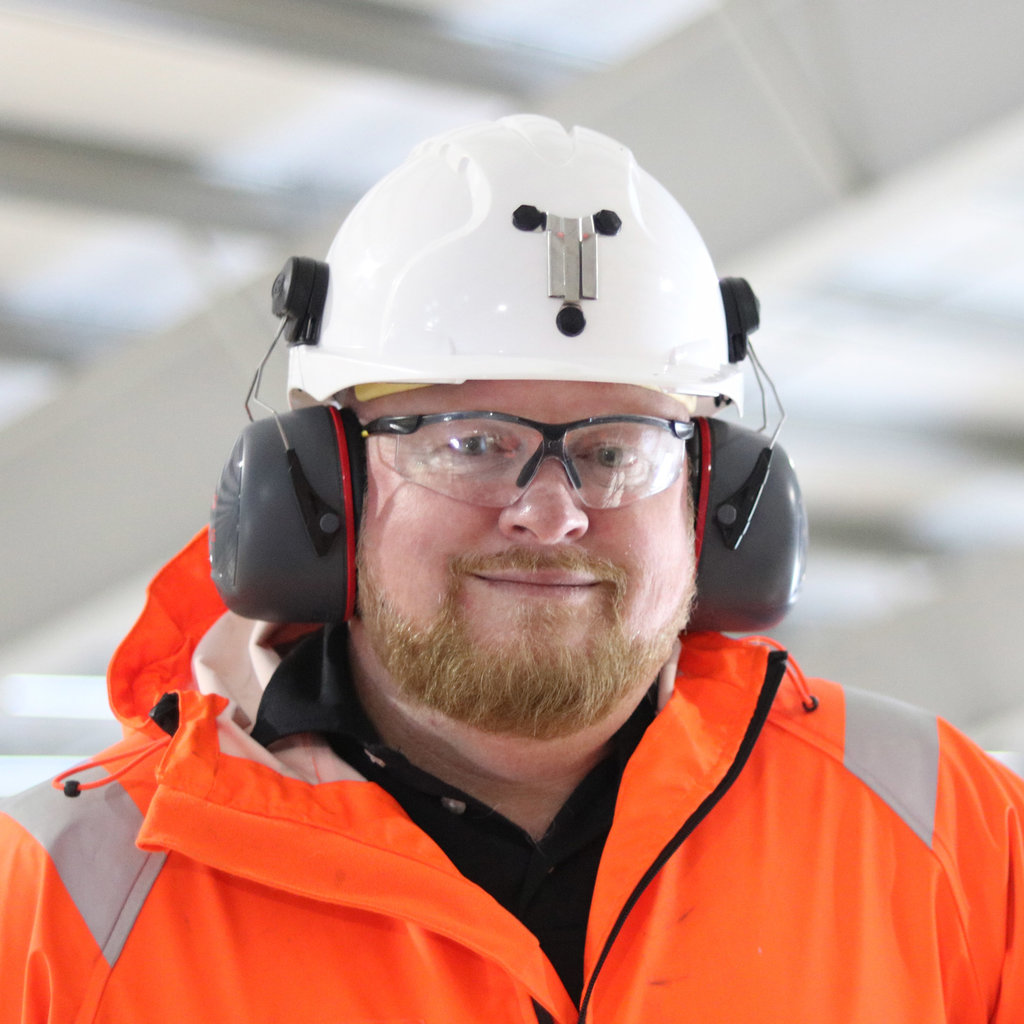
Phillip Day. Credit: Scotgold Resources
“The resources industry has also welcomed the appointment of Joel Fitzgibbon to the shadow resources portfolio. We want to see bipartisan support for the resources sector and the regional jobs it creates. We want to see the Government and the Parliament focus on attracting new investment to create new jobs well into the future.”
Queensland’s mining industry is a vital part of the economy and has a promising future. However, nothing can be taken for granted and business, politicians, and local communities need to be ahead of the issues the future may bring MacfarlaneWe must embrace technology to stay globally competitive, compete for every contract and earn the support of our governments and the people who elect them. believes.
“Our sector makes up almost 20% of the Queensland economy but we must not get complacent. We must embrace technology to stay globally competitive, compete for every contract and earn the support of our governments and the people who elect them,” he finishes.
