Company Insight
Sponsored by Glencore Technology
Glencore Technology: Proven innovations from inside the mine gate
Being part of a major mining house gives Glencore Technology unique credibility and insight, enabling faster adoption and smarter deployment of processing solutions worldwide.
Main image credit:
With roots in the demanding but prosperous Mount Isa Mines in Australia, Glencore Technology has spent more than four decades developing mineral processing, leaching, smelting and refining solutions within live operations.

Stanko Nikolic, Director of Technologies
Today, as a commercial arm of a global mining house, it offers technologies shaped not in isolation, but in working plants — from fine grinding and flotation to atmospheric leaching and copper refining.
We spoke with Stanko Nikolic, Director of Technologies, about the company’s role in an industry under pressure.
How would you describe Glencore Technology’s role in the mining industry today, and the impact it has had on the way minerals are processed around the world?
Stanko Nikolic: One thing that sets Glencore Technology apart from our peers in the mining and metals space is that we’re situated within a mining company. That gives us a constant, ongoing connection with operating sites that use our technology and are always looking at improving it. It also embeds in us an approach that’s very much about partnership, both with our internal and external clients.
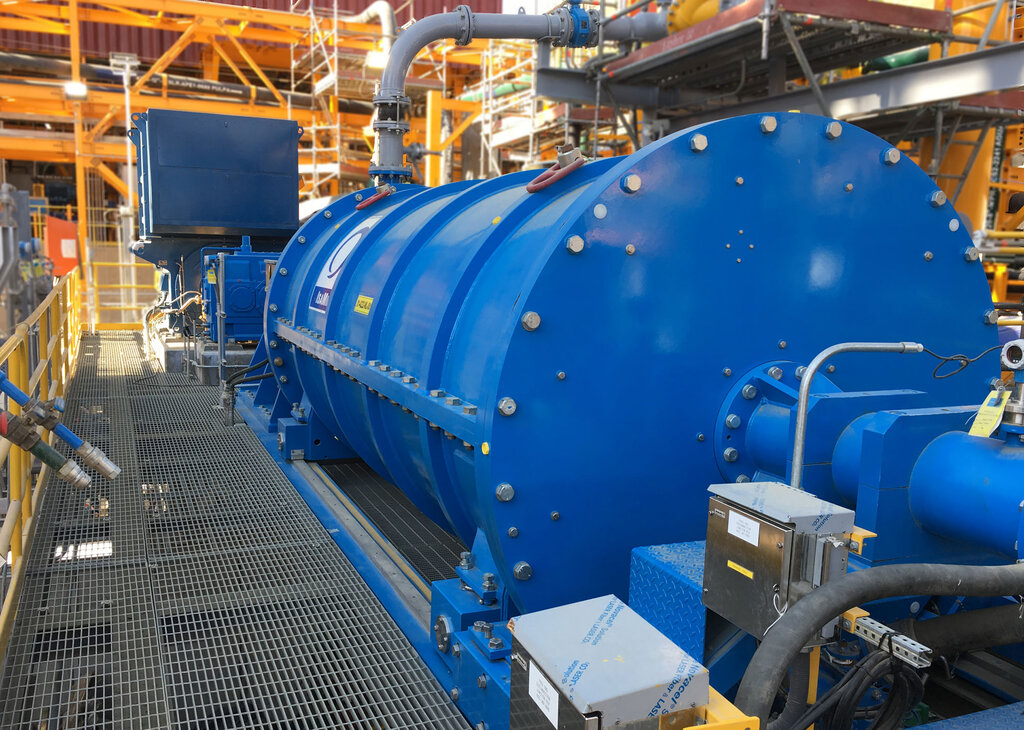
We see our role as working with clients to improve flowsheet efficiency and ultimately the bottom line, using technology developed within the Glencore group. Because our technologies — whether that’s IsaMill™ in fine grinding, Jameson Cell flotation, ISASMELT™ in smelting, Albion Process™ in leaching or ISAKIDD™ in copper refining — are rolled out across Glencore’s own operations, we can bring people to site, let them see the technology running and talk to the people who operate it. That connection makes it much easier to demonstrate that we’re delivering something meaningful, not just theoretical.
Mining companies are being pulled in multiple directions — rising demand, more complex ore bodies, stubborn cost pressures and ongoing geopolitical disruption across extraction and supply chains. From where you sit, what is placing the greatest strain on mineral processing today, and how do you see that evolving over the next few years?
Stanko Nikolic: The mining industry is always in a position where it wants greater efficiency and better performance, but it’s also inherently conservative. Companies want to be first to be second or third. So, the challenge is how to introduce innovation without asking them to take unnecessary risk.
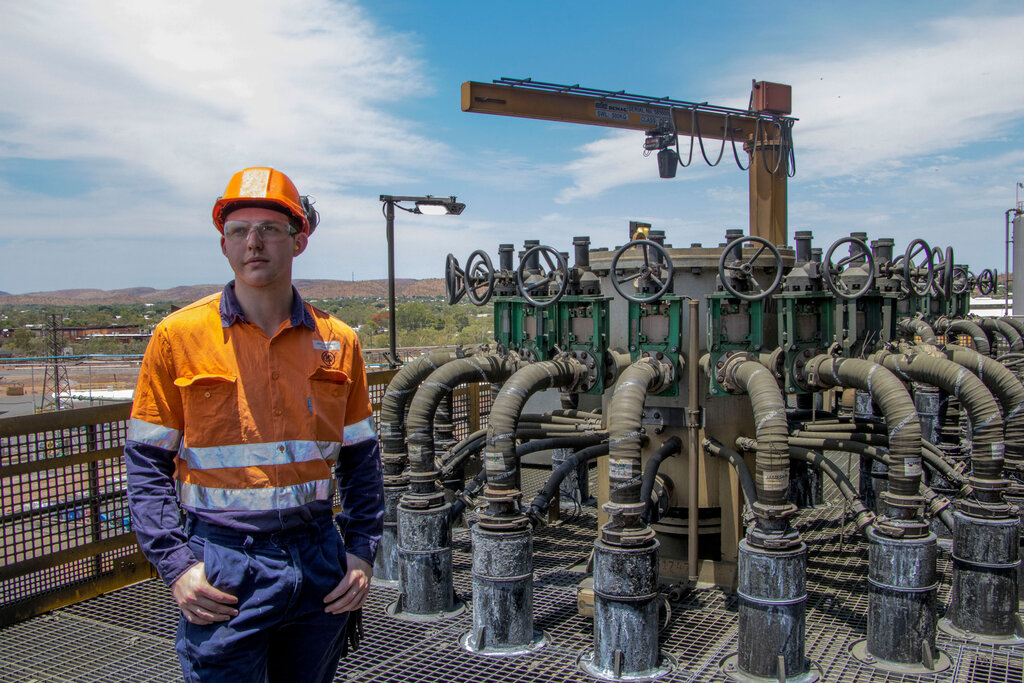
That’s where we can help, because we’re not asking clients to be first to be first. We’re showing them something that’s proven within our own operations and then pivoting it into their context. If you look at the Jameson Cell, there are more than 500 installations worldwide. Yet in regions where it hasn’t been installed before, there can still be hesitation. The way you overcome that is by presenting operating data and results so they can see the benefits for themselves.
The pressures also change quickly. One year it’s geopolitical issues. Another year it’s mine closures or operational disruptions, and suddenly companies are more focused on recovery than grade. With our technologies, often it’s not about installing entirely new infrastructure but adjusting how you run the circuit to respond to those shifts. Being able to deliver improvements without significant additional capital is a key part of helping the industry navigate those headwinds.
There’s a lot of cross-pollination and application pivots happening between industries now, which can lead to fantastic and unexpected outcomes. At the same time, I imagine that when you’re selling your technology to a mining company, being part of Glencore gives you a lot more credibility than a typical METS company might have.
Stanko Nikolic: It absolutely does. Having operating sites where we can trial innovations, prove them and train client personnel creates a level of credibility that’s difficult to replicate.
As you mentioned with cross-pollination, the IsaMill™ followed a very similar path. It started in food processing as an ultra-fine grinding mill, and when we were looking for technology that could grind down to less than 10 microns efficiently, that's where we went to different industries to ask them “What do you do? What do you use?”. Now it’s one of our key technologies, with over 160 of them used in the mining industry worldwide.
Caption. Credit:
Another big insight that’s emerged recently is that many mining organisations are adopting new tech and software, but aren’t getting the value out of it if it’s not implemented in a smart way or for the right reasons. So, how do you help operators balance the processing improvements and economics that come with new technologies?
Stanko Nikolic: We realised that demonstrating technical uplift wasn’t always enough. Historically, we would run lab tests or site trials and show improved recovery, and from a technical standpoint that was compelling. But sometimes projects didn’t progress because management needed to understand the full economic picture.
So, we changed how we engage. We now work with clients to quantify the financial impact, looking at net present value, capital and operating costs, and how changes affect the broader operation — water balance, tailings, reagents and so on.
In a greenfield project, the mine and primary crushing and grinding circuits represent the largest capital outlay. The concentrator may be a smaller portion of total spend, yet improvements at that stage can have a disproportionate impact on project economics. It’s not simply about saying you’ve achieved two per cent more recovery; it’s about understanding what that two per cent means for the overall value of the asset.
We’ve developed online tools for technologies such as IsaMill™, Jameson Cell and more recently the Albion Process™, allowing users to input parameters and estimate CAPEX and OPEX. That helps clients assess viability early on. For more complex brownfield situations, it requires closer engagement to build a detailed case, but the principle is the same: connect technical performance directly to site economics.
For more on Glencore Technology’s processing solutions and to explore its suite of proven innovations in detail, visit the Glencore Technology website.
Contact information
Glencore Technology
Email: glencoretechnology@glencore.com.au
Web: www.glencoretechnology.com