Interview
Q&A: ABB on power, automation and the future of mining
ABB’s Björn Jonsson discusses decarbonisation and lessons from the Thacker Pass lithium project in Nevada. In conversation with Alejandro Gonzalez.
Main image: Gavin Rech, area sales and technical manager at TOMRA Mining. Credit: TOMRA Mining
Main image: Björn Jonsson of ABB. Credit: ABB
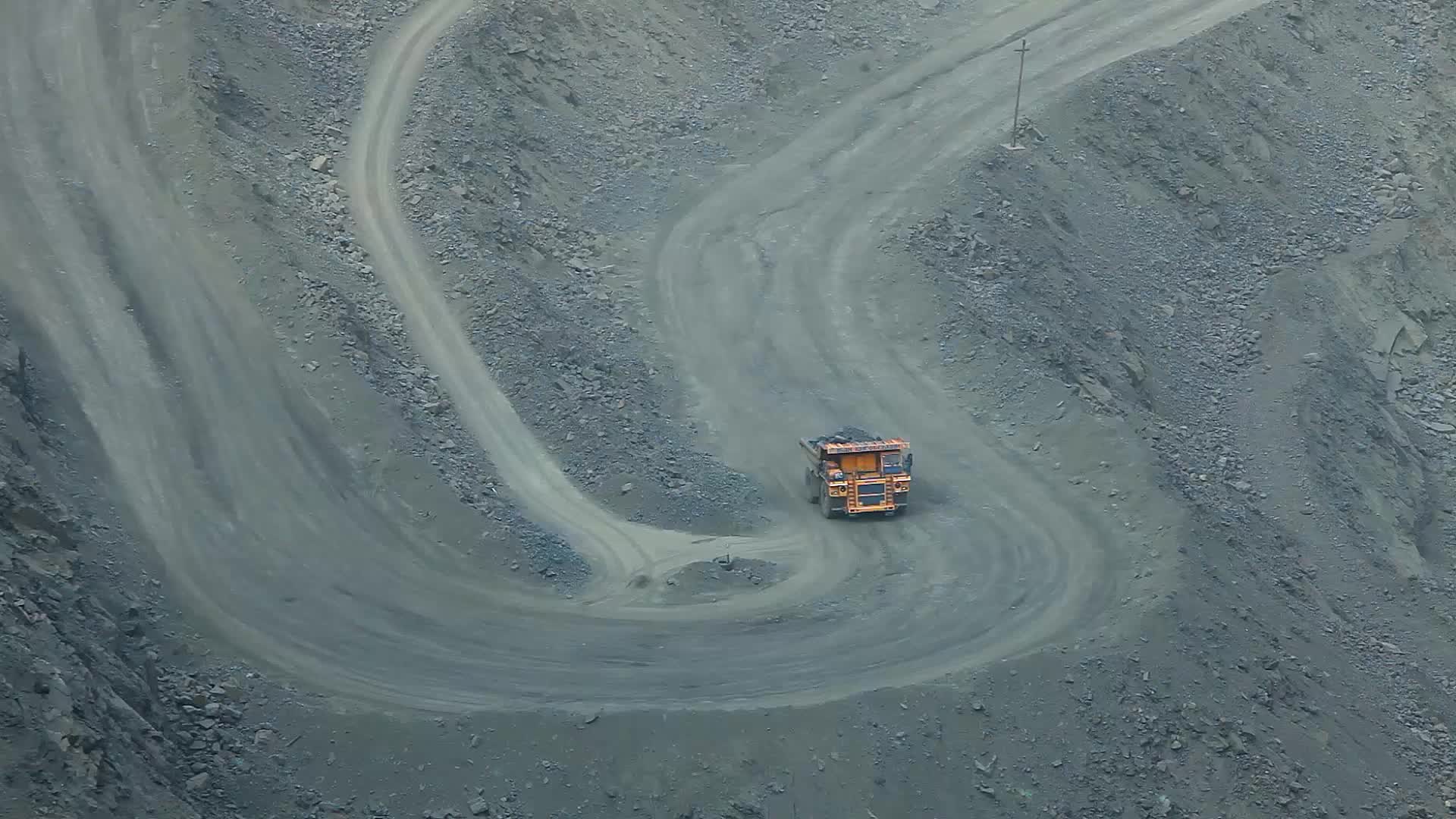
Main background video credit: Igor Bay / Shutterstock.com
M ining’s push towards lower-emission operations is increasingly reshaping how mines are designed and operated. Electrification is no longer being framed solely as a replacement for diesel fleets, but as a broader rethink of how energy is generated, distributed and managed across mining and processing operations.
In a report, Mining Technology parent company GlobalData describes electrification as mining’s “long-term solution” for decarbonisation, although it notes that large-scale deployment remains constrained by grid limitations, charging infrastructure requirements and capital intensity.
ABB’s latest decarbonisation framework positions the all-electric mine as an integrated system spanning electrification, automation and digital power management. That approach is now being applied at Lithium Americas’ Thacker Pass project in Nevada, where ABB is supplying power distribution systems, modular e-houses and a site-wide power management platform.
Currently under construction and targeting first production in 2028, the fully permitted, multi-billion-dollar development hosts the largest known measured lithium resource in North America. Beyond its role in supplying lithium carbonate to the electric vehicle supply chain, Thacker Pass is being closely watched as a test case for how large-scale mining projects can integrate advanced energy and operational technologies from the outset.
In this interview, Björn Jonsson, global business line manager for mining & materials at ABB, discusses the operational realities of mine electrification and the role of integrated energy systems. Mining’s push towards lower-emission operations is increasingly reshaping how mines are designed and operated. Electrification is no longer being framed solely as a replacement for diesel fleets, but as a broader rethink of how energy is generated, distributed and managed across mining and processing operations.
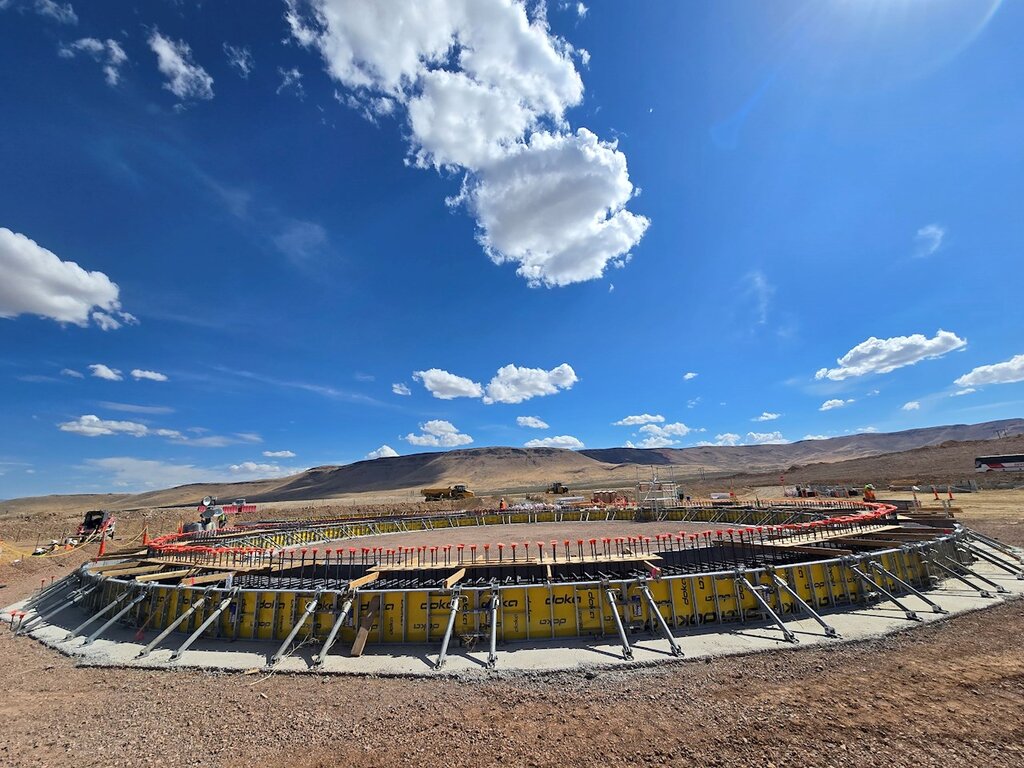
One of two liquid sulphur tanks under construction at Lithium Americas’ Thacker Pass project. Credit: Lithium Americas
Alejandro Gonzalez: How should operators rethink mine planning, energy infrastructure and production systems if electrification is more than a phased equipment upgrade?
Björn Jonsson: Electrification should not be viewed primarily as a fleet transition; it is fundamentally a redesign of the entire mining and processing system. Once operators move beyond mobile equipment and start treating energy as a core design parameter, mine planning, plant design and operational philosophy all change.
In a fully electrified model, energy infrastructure becomes the backbone of the mine rather than a supporting utility. For greenfield projects, there is an opportunity to design power supply, electrical systems and automation alongside the mine itself. That allows energy availability, plant design and production planning to be aligned from the beginning rather than adapted later.
For existing operations, electrification has to work within the current infrastructure. But this only changes the nature of the challenge, it does not make it impossible. You are dealing with installed equipment, existing power limits and operational constraints that cannot simply be ripped out and replaced by something new, all at once. In those cases, the task becomes a step-by-step reconfiguration of the site: upgrading power supply where possible, rethinking how energy is distributed and used, and gradually integrating electrified equipment and control systems in a way that does not disrupt production.
The key shift is still the same in both cases: electrification should be treated as a system-level change, not a collection of separate equipment upgrades. This is not to say it cannot be phased. Incremental electrification reduces risk to productivity. But the more you align energy, automation and production planning, the more value you get.
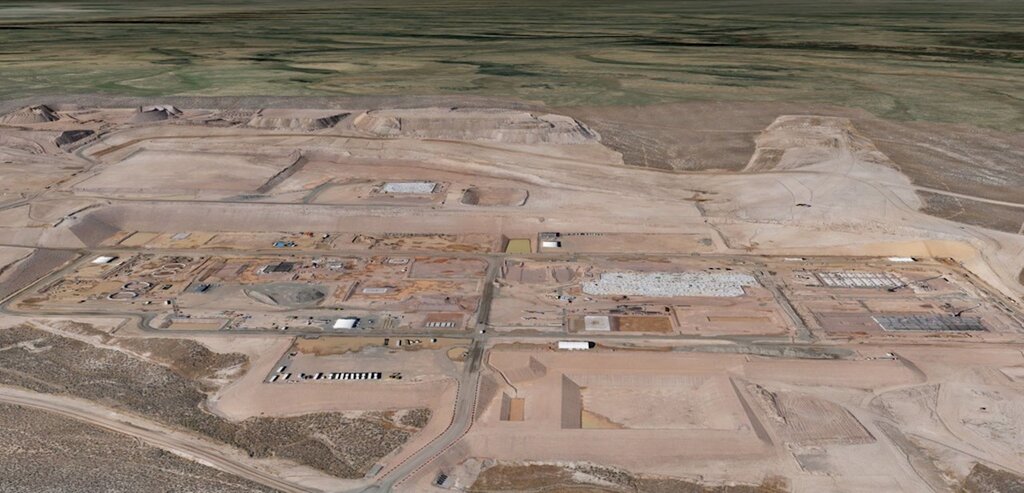
An aerial view of Lithium Americas’ Thacker Pass project in Nevada. Credit: Lithium Americas
Alejandro Gonzalez: Your model brings together power distribution, automation and digital optimisation. In practical terms, how are these layers coordinated?
Björn Jonsson: Coordination across power distribution, automation and optimisation at Thacker Pass is achieved through a tightly integrated control and power management infrastructure. ABB’s power management system will continuously monitor generation, grid import, on-site generation and process consumption, enabling real-time balancing of energy flows. This is of notable importance given the combination of grid supply, on-site generation and variable process loads.
The plant process control system will operate in parallel with the power management system and interfaced through defined control and communication layers. This ensures production demands, safety logic and energy availability are continuously aligned.
The main capability is fast, intelligent load management, including load shedding and prioritisation schemes, which allows the site to maintain stability even when supply conditions fluctuate. In practice, this turns energy from a fixed input into a dynamically managed resource.
Digital optimisation would sit above this layer, providing visibility and performance analytics to continuously improve energy efficiency and production stability over time.
Alejandro Gonzalez: When it comes to large‑scale lithium processing, how does electrification extend into energy‑intensive stages such as leaching, purification and refining?
Björn Jonsson: In lithium operations such as Thacker Pass, electrification goes well beyond mobile mining equipment and into the core of the processing plant itself. The site is not just extracting material it is running a continuous chemical process to produce battery-grade lithium carbonate. This includes beneficiation, leaching using sulphuric acid, and purification stages. These processes are energy-intensive and closely linked to heat and power management.
A key feature at Thacker Pass is that heat generated during sulphuric acid production is recovered and used to produce steam. That steam then drives turbines to generate electricity on site, which then creates a partial internal energy loop, reducing dependence on external supply.
In addition, the site uses a combination of grid power and on-site generation, supported by ABB’s power management system, which continuously monitors energy flows between sources and consumers. This allows the site to balance imported electricity, generated power and process demand in real time.
What this means in practice is that electrification extends beyond replacing diesel equipment into how the entire processing chain is powered and stabilised – especially in a site where production is ongoing and energy demand varies with process conditions.
It also reinforces why integration matters. When power generation, recovery systems and processing loads are all connected, stability becomes a system-wide requirement rather than something managed in isolation.
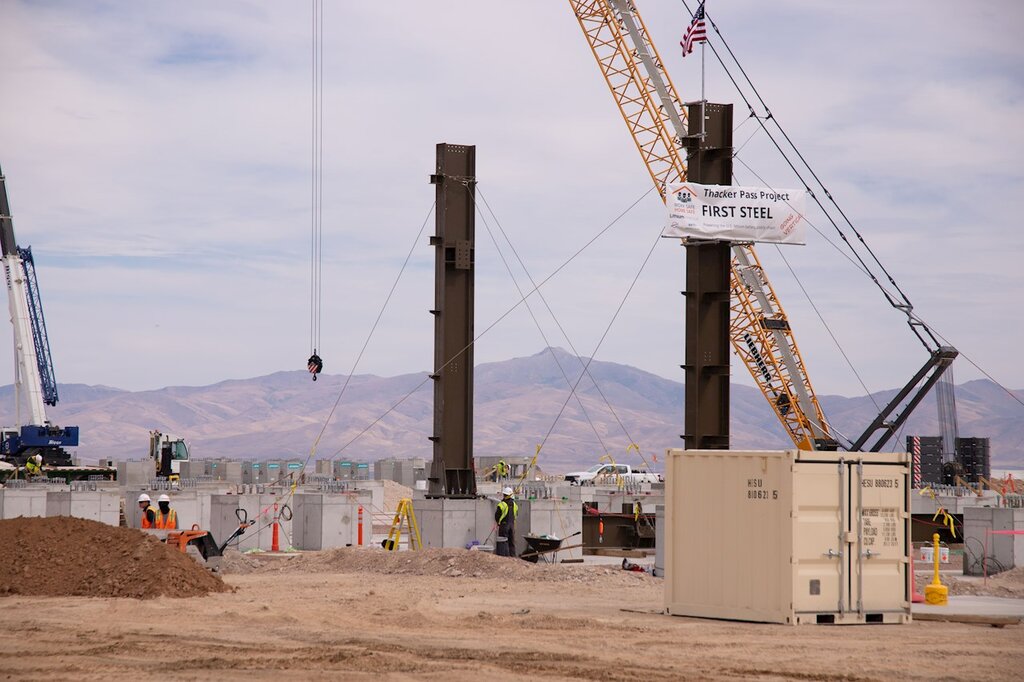
First structural steel beams at Thacker Pass installed in September 2025. Credit: Lithium Americas
Alejandro Gonzalez: Looking ahead five to ten years, what will an all‑electric mine actually look like in operational terms?
Björn Jonsson: A fully realised all-electric mine is an operation where mining, processing and energy systems are designed and run as a single coordinated system. In operational terms, that means three things are happening together: equipment across the mine and plant are electrically powered, energy is actively managed across multiple sources (grid, on-site generation, and potentially renewables), and control systems continuously balance production demand with available power in real time.
At Thacker Pass, you already see early versions of this model. There is a mix of grid supply, on-site generation from process heat recovery, and ABB’s power management system monitoring and controlling energy flows across the site. The system is designed to handle fluctuations in demand and maintain stability even in a weak grid environment.
Looking ahead, the evolution of this model is likely to unfold along several connected paths. Electrified operations will become more closely integrated with automation, linking production decisions and energy management in a far more coordinated way. At the same time, mining sites will increasingly draw on multiple energy sources, with systems designed from the outset to accommodate additional inputs over time, including renewable connections where these are viable. In parallel, electrical infrastructure is expected to become more modular, allowing mines to expand processing capacity or operations without the need to redesign entire system architectures.
However, the pace of this transition will continue to be shaped by practical constraints. In many regions, grid capacity and stability remain limiting factors, particularly where mines rely on weak or remote networks that cannot fully support electrification on their own. Integrated electrification and automation systems may appear to have higher capital intensity which presents a barrier, requiring upfront coordination and investment that must be carefully balanced against other priorities.
However, projects need to always consider the complexity of integration of multiple systems – often from different vendors or groups – which demand significantly higher engineering and commissioning effort which in turn negates any appearance of lower CapEx.
Taken together, these factors mean that while the direction of travel is clear – towards fully electrified, more intelligently controlled mining operations – the transition will be gradual. Projects such as Thacker Pass illustrate what can be achieved in a greenfield environment, but they also underline why industry-wide adoption will take time and is unlikely to follow a single, uniform path.
