
Cover Story
Can the UK build a domestic lithium industry?
British lithium projects are advancing from Cornwall to County Durham, but financing and global competition remain formidable obstacles. Heidi Vella reports.
Main image: Hard rock spodumene ore, commercially important source of lithium. Credit: BJP7images / Shutterstock.com
Background video supplied by comprimido/Creatas Video via Getty Images
A t a former china clay pit near St Austell and deep beneath Cornwall’s geothermal waters, companies are racing to establish a domestic lithium industry in the UK.
Under the government’s Critical Minerals Strategy, the UK is targeting at least 50,000t of domestically produced lithium or lithium carbonate equivalent (LCE) by 2035.
The ambition is not simply about mining. It is also about reducing dependence on a global battery supply chain dominated by China, which today produces around 70-75% of batteries, nearly 90% of cathode active material and more than half of refined lithium.
Whether that target can be achieved will depend not only on geology and technology, but also on the industry’s ability to secure financing in an increasingly competitive global market.

Jeremy Wrathall, Founder & Executive Chairman at Cornish Lithium Plc
Few companies illustrate both the opportunities and risks facing the UK’s lithium ambitions more clearly than Cornish Lithium. Founded a decade ago, the company has become one of the country’s most advanced developers, progressing projects based on both geothermal brines and hard-rock resources.
“At the time, people thought I was absolutely insane,” Jeremy Wrathall says about his decision to co-found Cornish Lithium.
The idea came to him after researching electric vehicles as a mining investment banker, he wondered: where is all this lithium going to come from? Then he recalled a friend had, some years previously, told him about lithium deposits found in Cornwall in the 19th century.
Having a “long understanding of commodities and training in future trends,” he was spurred on to find out more. Ten years later, the company is advancing two flagship projects, despite severe lithium market volatility.
Bumps in the road include extreme market volatility, where battery-grade lithium carbonate peaked near $82,000/t (£62,086/t) in early 2023, before plummeting to around $8,000/t by June 2025.

We’re seeing the lithium price come roaring back – it’s really exciting, the market is now much more mature.
Frank Smith, Founder and CEO of TowHaul
“That was hard,” he says, but a £55m investment from the UK National Wealth Fund across two tranches, alongside private investment from the UK and internationally, and multiple successful crowdfunding rounds, has enabled the company keep going.
“We’re seeing the lithium price come roaring back – it’s really exciting, the market is now much more mature,” he says, jubilantly.
In June 2026, the lithium carbonate price is hovering between $22,000/t to 25,400/t.
Cornish Lithium is pursuing two projects. At Cross Lanes, lithium could be extracted from naturally circulating geothermal waters around 2,000m underground using direct lithium extraction (DLE) technology. At Trelavour, near St Austell, the company has completed a feasibility study for a project targeting around 10,000 tonnes per annum (tpa).
The company plans to drill two commercial-scale wells at Cross Lanes in the coming months, with a demonstration facility expected to follow. Meanwhile, Trelavour is progressing through permitting, financing and offtake discussions ahead of a planned FID next year, with production slated for 2029, says Wrathall.
Cornish Lithium also recently won planning permission for a second geothermal lithium drill site four to five miles away from Cross Lanes. Wrathall hopes it will become one of more than 30 potential sites across Cornwall that could each produce up to 1,000t of LCE using what he described as a modular “cookie cutter” approach.
UK lithium ecosystem
Cornish Lithium was early to the market, but it’s just one of a wider ecosystem of projects hoping to deliver a lithium value chain in the UK.
Geothermal Engineering Limited is already producing 100tpa of lithium carbonate from two geothermal wells, which it hopes to scale up to 18,000tpa over the next decade.
SC Insights analysis forecasts lithium-ion battery cell demand growth of more than 15% annually between 2025 and 2035. While analysts expect enough lithium projects globally to meet much of that demand, they warn that delays to investment in Europe risk widening China’s lead in refining, battery materials and manufacturing. GlobalData similarly forecasts lithium mine output to more than double by 2035, but notes China is likely to remain a dominant force in lithium refining and battery production despite its share of mine supply declining.
In the UK, there are currently 135,000t of LCE in the pipeline from planned projects, according to the analysts – meaning the government target could be met. These include Tees Valley Lithium, a 100% subsidiary of the London Stock Exchange-listed Alkemy Capital Investments. The company hopes to build a so-called ‘midstream-refinery’ converting lithium carbonate into battery-grade hydroxide (which in turn goes into cathode active material) that will produce 25,000tpa.
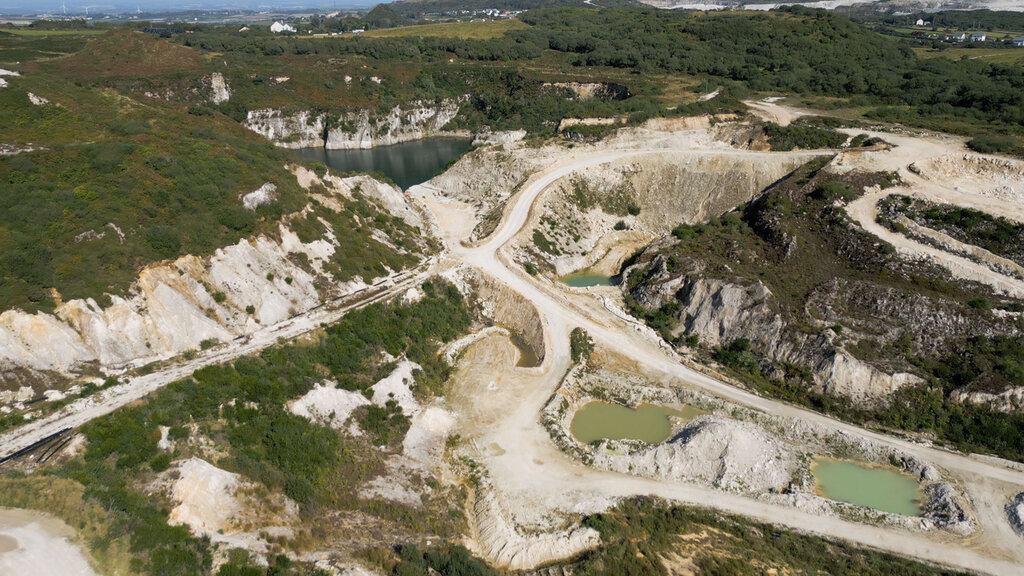
Aerial image of the Trelavour project. Credit: Cornish Lithium
“We believe the first stage of refining should always happen at a mine, as opposed to digging out spodumene in Australia and shipping it to the UK,” says CEO, Vikki Jeckell, “This in essence is shipping 94% waste.”
The refinery, which has been self-financed to date, hopes to get its feedstock from locally produced lithium, but also South America and from recycled material. It will use Veolia HPD technology that’s already been deployed at scale outside of China.
To date the company has completed a FEED study, secured a binding offtake agreement with Glencore for 40% of production and is now progressing finance ahead of taking an FID.
Further north, Northern Lithium has secured exclusive long term mineral rights to extract lithium from brines over an area of 240km2 across the Northern Pennine Orefield, County Durham. It aims to develop up to six production sites, producing over 20,000tpa of LCE by 2035.
Managing director Nick Pople says the company has confirmed consistent, economically viable concentrations of lithium in brines, at shallow depths, with strong flow rates and significant long-term yield potential.
At the end of 2022 ... we had around 50,000 litres of brine sitting in farmers’ barns around the area.
“At the end of 2022 we’d shown we could drill down into the granite and get brines to the surface – we had around 50,000 litres of brine sitting in farmers’ barns around the area,” he says.
Further successful long-term pump test programmes were completed in 2024-25 to prove the Evove DLE technology it plans to use. This, says Pople, has enabled the company to now work towards first commercial production of around 1,500tpa of LCE across two bore holes using modular production units by 2028.
Full planning and permitting applications will be submitted next month, and over the next few months, the FEED study for a first commercial scale DLE processing plant will be completed. This will lead to detailed engineering and FID on construction.
Pople says the company, which has raised £9.6m to date and will need roughly a further £30m-40m of funding between now and 2028. But he insists, because its ‘brining’ and not mining, it will have a some of the lowest capex and opex costs globally.
“That’s a big advantage; we would expect overall opex costs to be kept below $5,000/t, but we are using a base case of $20,000/t for our modelling,” he says.
Financing – the final hurdle
Financing remains the defining challenge for the UK’s lithium sector. Projects must compete against established Chinese supply chains while operating with higher labour, energy and capital costs. Lenders, meanwhile, need confidence that projects can remain profitable through commodity price downturns.
In addition, it’s hoped supporting policy can help reduce overall costs. The British Industrial Competitiveness Scheme could give companies 25% off their electricity bills and the DRIVE35 10-year programme, which is designed to accelerate investment in zero-emission vehicle technologies and strengthen the UK’s end-to-end automotive and battery supply chain, is offering £4bn in government grants.
Weardale Lithium, a geothermal project in County Durham, has already secured funding through the programme. Projects can be supported further by UK and EU origin rules that require certain levels of local sourcing and potential carbon border adjust taxes for critical minerals.
The industry is also very welcoming of the Critical Minerals Strategy – which itself offers £50m in government money – and have praised the efforts of Chris McDonald MP Minister for Industry in the Department for Energy Security and Net Zero.
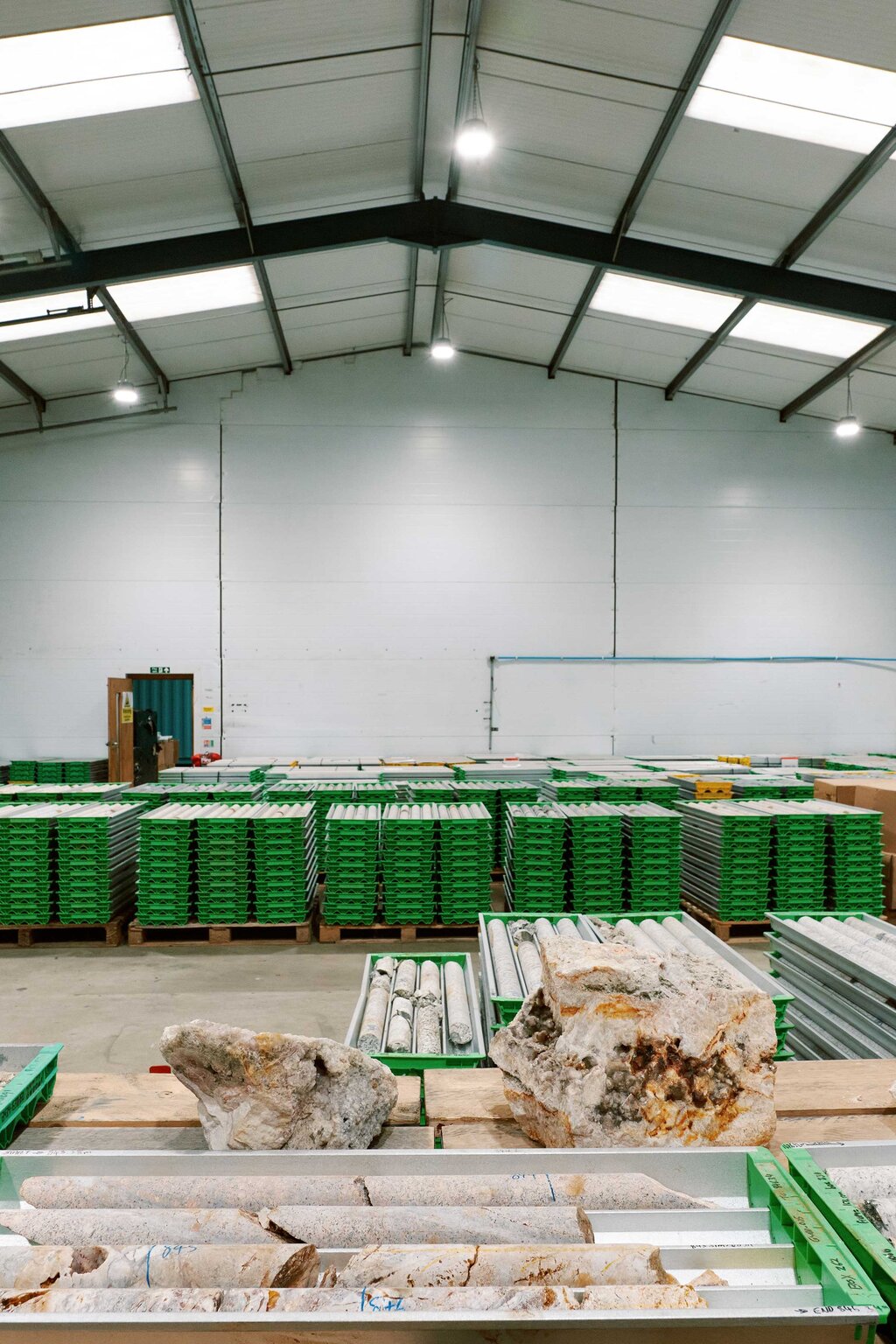
Spodumene core samples. Credit: Cornish Lithium
But Pople says the government needs to go further.
“It’s an active geopolitical imperative that is particularly important given the tragic events in Ukraine and Iran – we need domestic security. I think you’ve got to look at what the US is doing, they’re going gangbusters for critical minerals.”
Jekkell agrees. It’s the so-called ‘Valley of Death’ – transitioning from feasibility to a bankable project – where support is needed the most, she says.
“That’s where projects go to die,” she adds. A contract for difference for critical minerals, such as what is offered to renewables, or the government taking equity in projects – which is happening in the US and China – would give project finances certainty, she adds.
One such example is Imerys British Lithium project which has been paused, with the company citing capital constraints and market uncertainty. The mothballing is largely believed to be due to Imerys choosing to focus on its French Emili lithium project, however, after it received €50m ($59m) in backing from the French state, with the government taking a minority equity stake.
Competing in a global race
Despite growing momentum, financing remains the decisive hurdle for Britain’s lithium sector. While several projects have advanced through exploration and demonstration phases, many must still secure the substantial capital required for commercial deployment.
According to SC Insights co-founder and managing director Andrew Leyland, improving lithium prices have strengthened project economics, but major challenges remain.
“In Europe, many projects in the carbon active material pipeline have not yet secured finance, meaning it can be quite tricky to secure an offtake with an end user,” says Leyland. Offtakes are often a condition of securing financing.
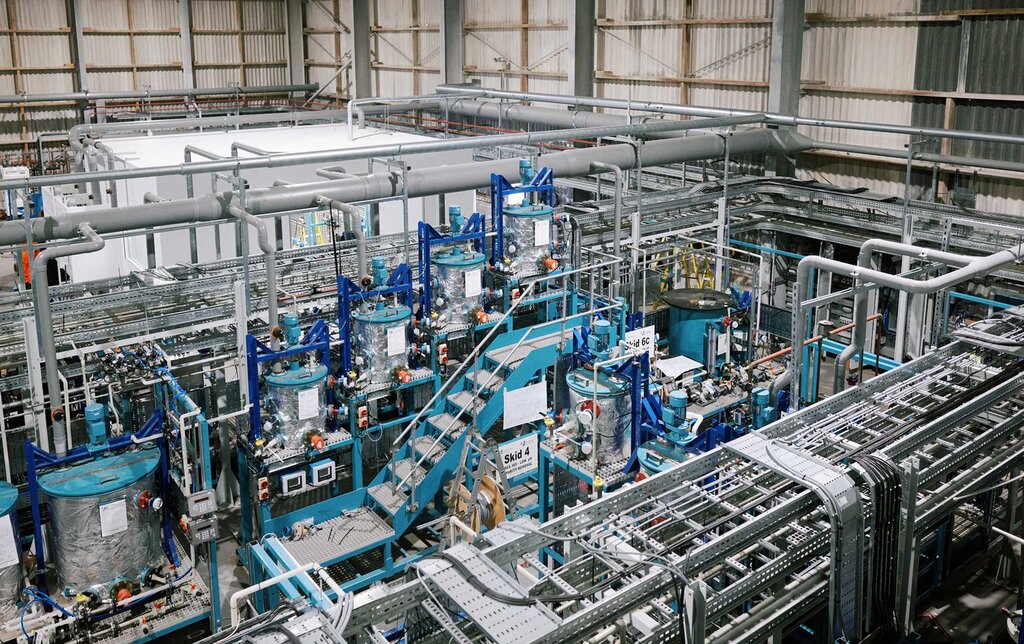
The Trelavour demonstration plant. Credit: Cornish Lithium
“Unlike in China, projects will be essentially supplying into an industry that’s in the pipeline but doesn’t yet exist, with many projects more likely to go bust than get financing,” he says.
He adds, however, that the markets have turned, prices have nearly tripled in a year and today most projects are economically viable – meaning another wave of projects will move through to financing.
“It remains to be seen how many of the British projects can make the cut in this next wave of financing,” he says.
