Company Insight
Sponsored by KSB
LAPIS mechanical seals: rethinking slurry pump sealing for water‑constrained mining operations
The mining sector is notorious for being slow when it comes to embracing new technology.
Main image credit:
Water is becoming one of mining's most closely managed resources. Operations in remote and water-constrained regions not only have to worry about water supply; treatment, transport, storage and disposal all add to operating expenditure, while environmental targets are placing greater scrutiny on how water is used across a site.
At the same time, operators are expected to increase throughput, reduce downtime and extend equipment life.
One area receiving renewed attention is slurry pump sealing.
The hidden cost of conventional slurry pump sealing
Shaft seals play a critical role in protecting slurry pumps from abrasive process media. Many operations still rely on conventional packing systems, such as stuffing boxes, which require a continuous supply of flush water to lubricate and protect sealing surfaces.
While proven and widely used, these systems introduce several ongoing costs:
- Continuous water consumption
- Additional treatment and filtration requirements
- Regular packing adjustment and replacement
- Maintenance of flush water infrastructure
- Production losses associated with maintenance shutdowns
For sites where water must be sourced, filtered or desalinated, flush water requirements alone can become a significant operating expense over the life of a pump.
There is also the challenge of supplier coordination. In many installations, pumps and seals are sourced from different vendors. When failures occur, troubleshooting often involves multiple parties, which can slow resolution and extend downtime.
Why more mines are adopting mechanical seals
Mechanical seals reduce many of the limitations associated with traditional packed gland arrangements. Because they require little or no flush water, they can substantially reduce site water consumption while simplifying support systems around the pump.
Additional benefits may include:
- Longer service intervals
- Reduced maintenance requirements
- More consistent sealing performance
- Lower operating costs
- Improved equipment availability
However, the seal itself is only part of the equation. Seal performance is influenced by shaft movement, vibration, alignment, slurry characteristics and pump operating conditions. Achieving the full benefit of a mechanical seal requires these factors to be considered together rather than as separate components.
LAPIS mechanical seals and the value of an integrated slurry pump design
Integrated designs simplify installation, improve maintainability and provide greater confidence that all components are working together as intended. They also create a single point of accountability for technical support and service.
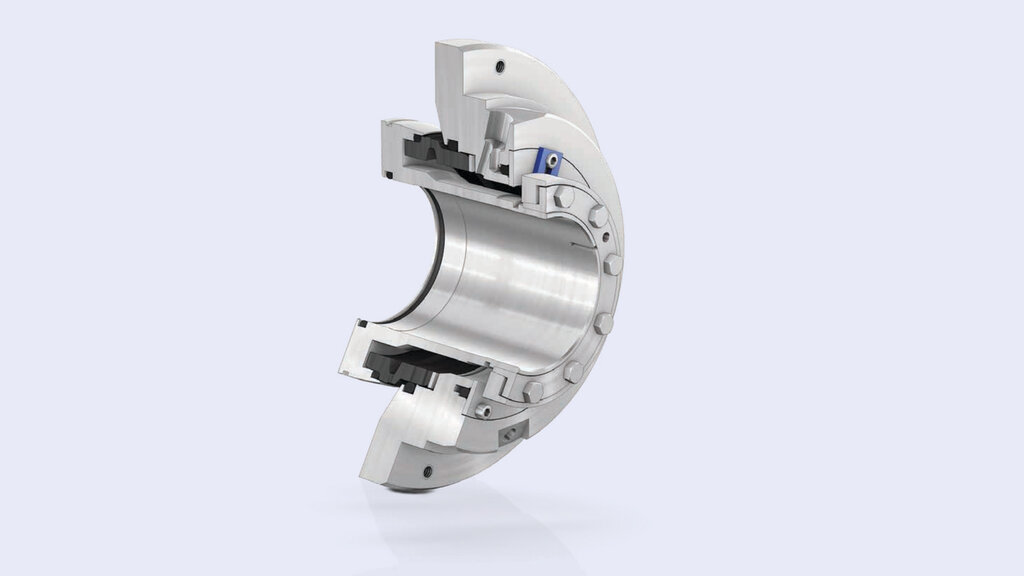
Cross-section of the LAPIS slurry seal.
This philosophy led to the development of the LAPIS slurry seal from KSB, engineered specifically for GIW® slurry pumps.
Rather than adapting a general-purpose mechanical seal for slurry duty, LAPIS was designed around the operating conditions commonly encountered in heavy-duty slurry applications.
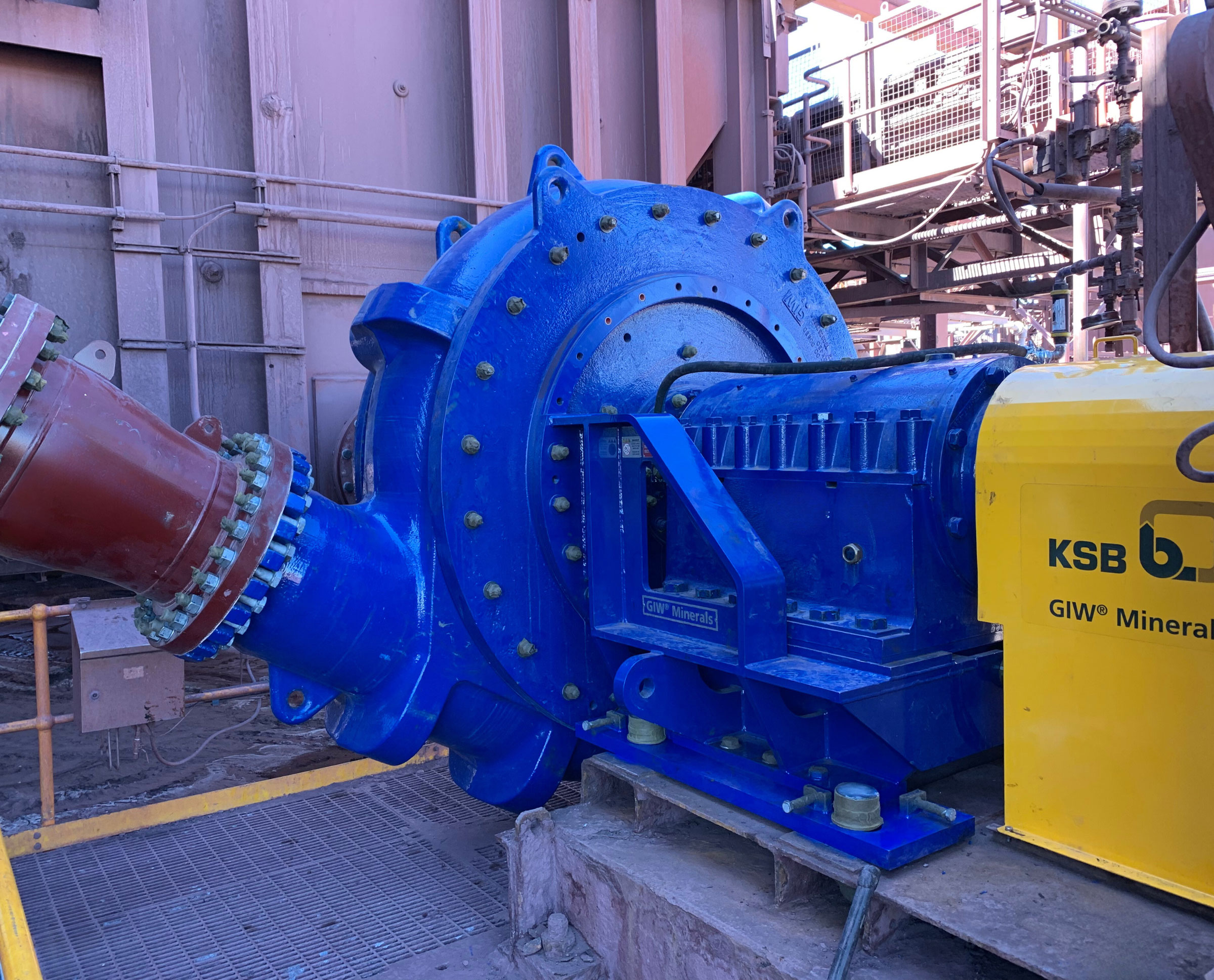
KSB’s GIW® MDX slurry pump.
LAPIS slurry seal features for GIW® slurry pumps
Field experience and customer feedback played a significant role in the seal's development.
Several design features target common causes of seal wear and failure in slurry environments:
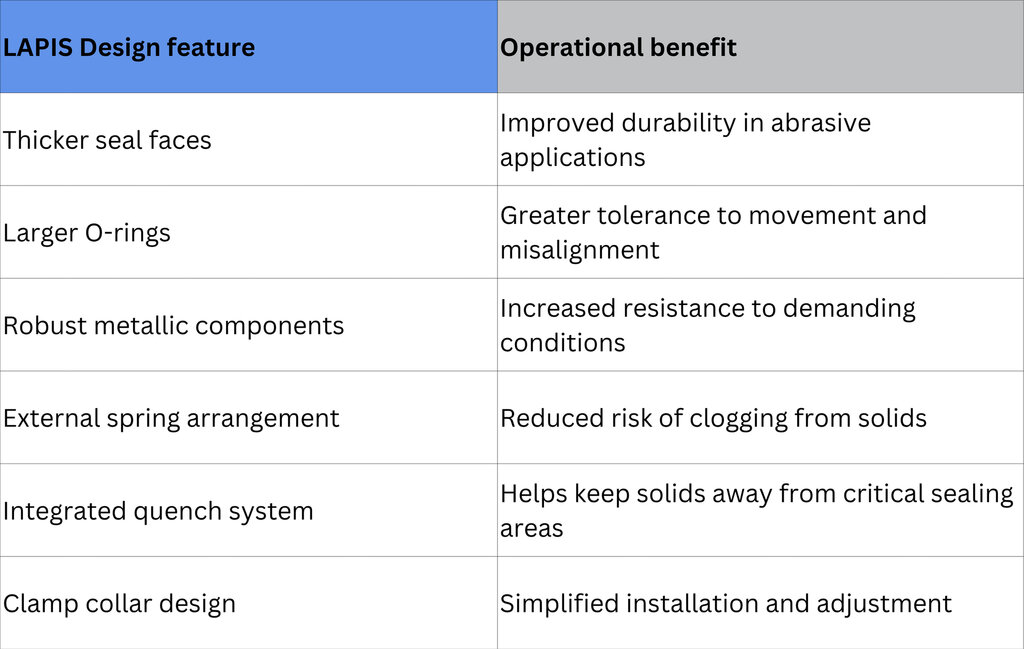
Additional alignment features and dedicated installation tools help improve setup accuracy, while certain pump configurations eliminate the need for adapter plates, reducing installation time and complexity.
Importantly, LAPIS was developed specifically for GIW® LCC and LSA slurry pumps, providing a purpose-built fit rather than a modified general industrial solution.
Proven slurry seal performance in demanding mining conditions
The performance advantages of integrated mechanical sealing have been demonstrated in both testing and field applications. LAPIS has operated successfully in slurries containing up to 70% solids by weight and across a broad range of particle sizes.
Operators have reported improvements in service life and installation efficiency compared with previous sealing arrangements. In one application, a seal that had previously operated for less than 2,000 hours was replaced by a LAPIS unit that exceeded 3,000 hours and remained in service.
More than 75 units have now been deployed globally, delivering measurable reductions in maintenance requirements while helping sites lower water consumption.
Learn more about LAPIS mechanical seals for GIW® slurry pumps
Shaft seals may represent a relatively small component within a slurry pumping system, but their impact on water consumption, maintenance requirements and operating costs can be substantial.
For mining operations seeking to reduce flush water use, improve reliability and simplify maintenance, integrated mechanical sealing solutions provide a practical and proven option.
To learn more about LAPIS mechanical seals and their application in GIW® slurry pumps, contact the KSB team or visit our website.