Event Preview
IMARC 2026
International Mining and Resources Conference + Expo (IMARC)
27-29 October 2026
ICC Sydney
imarcglobal.com
Main image: Sherene Asnasyous, IMARC Event Director.
The mining industry is facing growing pressure to turn ambitions around critical minerals, resilient supply chains and greater value-adding into commercially viable projects and operational improvements. In this Q&A, IMARC Event Director Sherene Asnasyous discusses how the event has evolved alongside the industry, the changing relationship between mining and the wider resources ecosystem, and the challenges around capital, project delivery and applying technology to improve operations.

Sherene Asnasyous, IMARC Event Director
IMARC was first held in 2013. Looking back over the past 13 years, how has the event evolved alongside the mining industry, and what changes in the sector have been most significant in shaping the conference?
Sherene Asnasyous: I started working on IMARC in 2017, but I've been working on mining and resources events for around 20 years now, so I've had the opportunity to watch the industry, and particularly the conversations around it, change quite significantly over that time.
I'm certainly not the technical expert in all of the areas we cover at IMARC. A big part of my role is listening to mining companies, governments, investors, technology providers, associations and our partners, understanding what's keeping them up at night or where they see opportunity, and then working out which conversations we need to bring together through the programme.
When I first started, many of the big conversations were understandably centred on commodities, projects, investment and production. Those things are still fundamental but today, mining sits at the intersection of so many much bigger issues, including energy, technology, geopolitics, critical minerals, decarbonisation, productivity, workforce, supply-chain resilience and industrial policy.
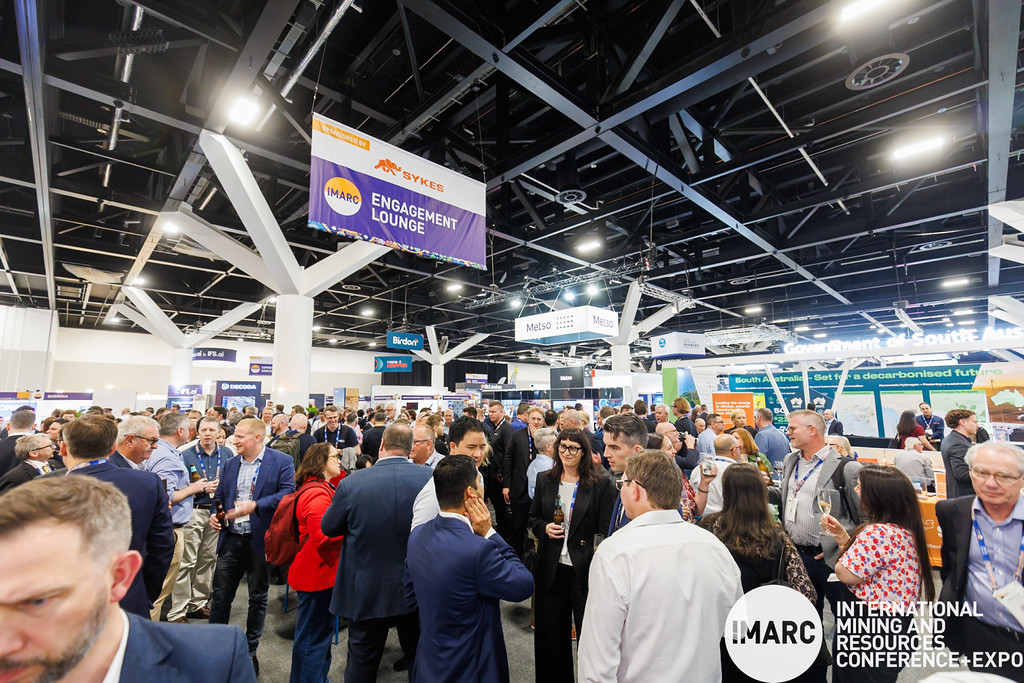
You can really see that evolution reflected in IMARC. Mining companies, explorers, investors and METS companies remain at the heart of the event, but the ecosystem around them has become much broader. We now have governments, export credit agencies and international institutions involved alongside companies much further downstream; from automotive and advanced manufacturing to technology, energy and other major mineral users. Increasingly those conversations are international, with organisations from markets including Japan, Korea, the United States and Europe wanting to engage directly with Australia's resources sector.
One of the biggest shifts I've observed through those conversations is that resources are no longer being discussed simply as commodities. They're increasingly talked about as strategic inputs into everything from energy and technology to advanced manufacturing and the industries and economies countries want to build for the future. That's changed who wants to engage with the mining industry and, importantly, what they want to talk about.
IMARC has evolved with that. It has become less about individual parts of the mining value chain operating in isolation and much more about bringing those different groups into the same room.
Caption. Credit:
The overarching theme for this year's conference is ‘From Strategy to Execution: Delivering Responsible, Resilient and Viable Resources’. What does that theme mean to you, and why did it feel particularly relevant for IMARC in 2026?
Sherene Asnasyous: For me, the most important words are actually “from strategy to execution.”
In developing this year's programme, something we kept hearing was that there has already been a lot of discussion about what needs to happen. More critical minerals, more resilient supply chains, better productivity, lower emissions and the opportunity for Australia to do more processing and value-adding domestically are all well-established ambitions.
What kept coming through in our conversations was the harder question: how?
How do projects actually get financed and built? How do they become commercially viable? How does a new technology move from a successful pilot to being implemented across an operating mine? How do policy ambitions translate into investment and projects on the ground?
That's where I think the conversation has shifted, and it's really what shaped the theme.
The word “viable” was also very deliberate. One thing I've heard repeatedly from industry is that a project can be strategically important and responsibly developed, but ultimately it still has to work economically. If projects cannot attract capital, reach production and remain competitive, the strategy around them can only take us so far.
So for me, 2026 is really about moving the conversation from ambition to delivery and hearing from the people who are actually responsible for making that happen.
Caption. Credit:
The conference is organised around three sub-themes: ‘The Global Resources Reset’, ‘Capital, Confidence and Project Delivery’ and ‘Operating for the Next Cycle’. Of those three, what conversations do you expect to generate the most interest or debate at this year's IMARC?
Sherene Asnasyous: I suspect ‘Capital, Confidence and Project Delivery’ will generate some of the strongest debate because it reflects a tension that comes up constantly in the conversations we're having.
On one hand, we're hearing enormous expectations around future mineral demand, particularly for critical minerals. On the other, we're hearing from explorers, mining companies and investors about how difficult many of the projects needed to supply those minerals can be to finance and develop.
That's creating a fascinating conversation around what governments can and should do, what investors need to see, the role of export credit agencies and development finance, and how strategic importance translates into commercial viability.
But ‘The Global Resources Reset’ will be equally interesting because geopolitics has become impossible to separate from the mining conversation. Trade, tariffs, critical mineral agreements and supply-chain security are increasingly part of the discussions we're having with both industry and governments.
Then ‘Operating for the Next Cycle’ brings everything back to the mine site. Whatever happens in geopolitics or capital markets, operators still need to produce safely, efficiently and competitively.
What has been interesting for me in putting the programme together is realising that the three themes aren't really separate conversations anymore. The more people I speak with, the more apparent it becomes that they increasingly depend on each other.
Caption. Credit:
Finally, ‘Operating for the Next Cycle’ raises the question of what the industry needs to be ready for next. From the conversations you are having with participants, what are you hearing about how mining companies are preparing for that next phase of the industry?
Sherene Asnasyous: The word I keep hearing is productivity, but increasingly the conversation seems to be about how technology actually translates into better operational outcomes.
I had a great reminder of that just last week. I was part of a sideline conversation with Pat Boniwell from Byrnecut and Alan Broome, Chairman Emeritus of Austmine, and they were talking about exactly this. There is so much technology and equipment available to mining companies, but what I took away from that conversation was that the technology itself isn't really the point. What matters is how it is applied, whether it solves an actual operational problem and, ultimately, what benefit it delivers.
I found Pat particularly interesting to listen to because his perspective was grounded in what actually happens at an operating mine. It made me think about the technology conversation a little differently. We talk a lot about AI, automation, integrated operations, digital twins and all of the innovation coming into mining, but the questions operators are asking are much more practical: Does it make the operation safer? Does it improve productivity or recovery? Does it reduce downtime or cost? Does it help people make better decisions? And can it actually be implemented and scaled in the real world?
That's something I'm hearing more broadly as we build the programme. The conversation is becoming less about technology for technology's sake and more about integration and application – how technology, equipment, people, energy, maintenance and operational decision-making come together to deliver measurable improvements.
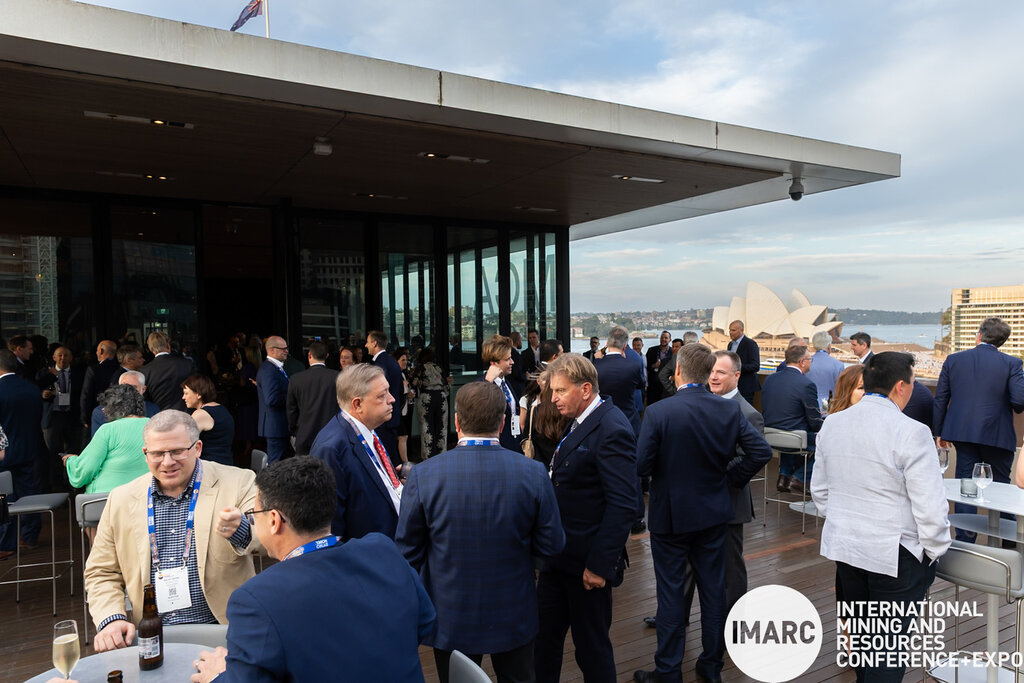
That conversation also reminded me of something important about IMARC itself. We spend an enormous amount of time building the programme and thinking about the conversations we want to put on stage, but some of the most insightful discussions happen beside it. They're the conversations over coffee, walking between sessions or when you happen to put two people with decades of experience together and listen to where the discussion goes.
For me, that's part of what IMARC is there to create. The presentations and panels provide the ideas and provocations, but often it's the conversations happening around them that turn those ideas into something practical.
Your pass to IMARC26 is waiting, with exclusive MINE/MINE Australia offers!
Eligible personnel from mining companies and mining contractors can attend for free with a Mining Guest Pass (Subject to qualification criteria).
Use code globaldata15 for 15% off Delegate Passes (full conference access) or to claim a FREE Expo Visitor Pass, giving you access to the following: the Exhibition floor, Global Opportunities Conference Stream, Mines and Money @ IMARC's Investment Conference Stream, IMARC Exchange Roundtables and the Event App.
Join the global mining and resources community in Sydney and register now before the doors open.
Secure your pass today
