Cover Story
Europe’s tungsten revival faces a race against China
European tungsten projects are deploying advanced processing technologies as export controls reshape supply chains and increase the value of non-Chinese supply. Heidi Vella reports.

Main image: Mittersill mine portal with loader.
Used in aerospace, alloys, bullets, metalworking, missiles and drill bits, tungsten – with its incredibly high melting point of 3,414°C – has diverse applications. In times of peace, it is a necessary but unremarkable market. In periods of global unrest, however, access to it becomes imperative and strategic.
Now is one of those times. Amid a flurry of wars and heightened geopolitical uncertainty, tungsten prices have surged, with Fastmarkets reporting a year-on-year increase of 631% in its ammonium paratungstate (APT) benchmark for material exported from China.
A primary catalyst was Beijing replacing its old quota system in February 2025 with discretionary export licences covering APT, tungsten oxide and tungsten carbide compounds. By the end of 2025, China, which accounts for roughly 80% of global mined supply, further tightened its grip by capping the number of companies authorised to export tungsten for 2026 and 2027 to just 15.

Two years ago, the industry had a total market value of about $5bn – today it is $50bn.
William Parry-Jones, a tungsten commodity expert and the founder of tungsten-focused Wolfram Advisory
Its geological characteristics also make extraction particularly demanding. Many tungsten deposits occur as narrow veins or vein systems, often at depth, favouring underground mining and requiring precise drilling, selective extraction and careful control of dilution.
As William Parry-Jones, a tungsten commodity expert and the founder of tungsten-focused Wolfram Advisory, frames it: “Two years ago, the industry had a total market value of about $5bn – today it is $50bn.”
China’s controls revive Europe’s tungsten ambitions
Concerned by the emerging picture, the EU, which imports approximately 80% of its processed tungsten and around 21% of its ore, took the decision in May to shortlist the metal for its first coordinated critical minerals stockpile under the Critical Raw Materials Act (CRMA) framework. The CRMA, which entered into force in 2024, is intended to reduce the EU’s dependence on concentrated external supply by increasing domestic extraction, processing and recycling, while diversifying imports.
The West’s designation of tungsten as a critical mineral, rising prices and new government funding have boosted the prospects for several European mines now seeking to come online. These include Allied Critical Metals’ underground Borralha and Vila Verde projects in Portugal; Australia-based EQ Resources’ open-pit Barruecopardo mine in Spain; and Abenójar Tungsten’s El Moto underground mine, also in Spain. In the UK, Tungsten West’s open-pit Hemerdon mine in Devon has also received government backing.

All the tungsten projects that have come on-stream in Europe in the last decade have very rapidly become insolvent.
William Parry-Jones, a tungsten commodity expert and the founder of tungsten-focused Wolfram Advisory
The $94.17m (£71m) package, announced in August 2026, comprises £36m of equity and up to £35m of debt financing to support construction, commissioning and processing costs, with the UK Government also securing an exclusive period to negotiate an offtake agreement covering up to 50% of projected tungsten production. In September 2026, Tungsten West agreed an eight-year deal with US-based Elmet Technologies to supply 1,000 tonnes per annum (tpa) of contained tungsten trioxide (WO₃) from Hemerdon. The offtake agreement further links Hemerdon to Western downstream supply chains, with pricing referenced to European APT.
Yet, as Parry-Jones notes, projects on the continent face myriad hurdles to reach the finishing line, including tough regulations, public resistance and a lack skills and hands-on experience developing tungsten mines.
“All the tungsten projects that have come on-stream in Europe in the last decade have very rapidly become insolvent. Partially, due to the price, but in almost every case, there have been massive technical and operational oversights,” says Parry-Jones.
Hemerdon shows the cost of getting tungsten wrong
Hemerdon illustrates the risks. Under previous management, the project “set fire” to £350m of investors’ money, according to Parry-Jones. Australian-owned Wolf Minerals (UK), which had restarted the mine after a 45-year hiatus, went into voluntary administration in 2018 after being hit by high operating costs and weak tungsten prices. Following the restart, Wolf had planned to produce around 3,000tpa of tungsten and tin.
The problems were not purely economic. Wolf encountered processing problems, including poor recovery and unreliable crushing and screening. In its 2025 full-year financial results, Tungsten West's chairman identified the roll crushers installed by Wolf as "not being sufficiently robust to process high volumes of granite and were prone to failure".
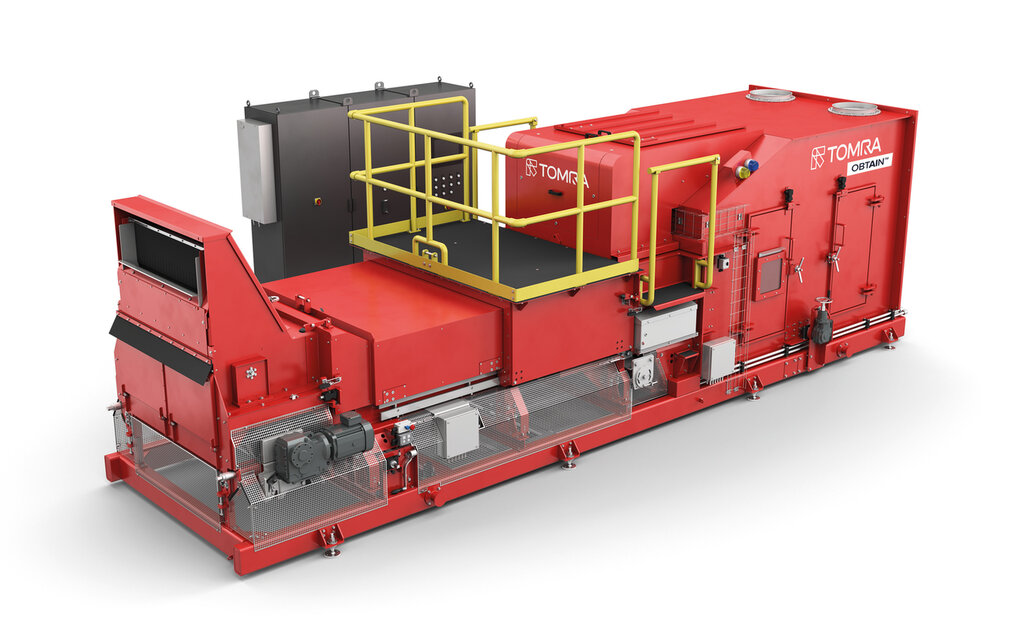
TOMRA's XRT/OBTAIN ore-sorting equipment. Credit: TOMRA Mining
Tungsten West has since sought to address these problems through a redesigned processing circuit, including six sensor-based X-ray transmission (XRT) ore sorters from TOMRA Mining, equipped with its AI-enabled OBTAIN particle-detection technology. The system is designed to remove barren or weakly mineralised material before it enters the downstream circuit, reducing processing volumes, energy use and operating costs while improving the quality of the tungsten feed.
...The roll crushers [were described] as "not being sufficiently robust to process high volumes of granite and were prone to failure.
Frank Smith, Founder and CEO of TowHaul
The current operator describes Hemerdon as the second-largest tungsten resource globally and the largest outside China. Parry-Jones says the current team are “good and recognise the challenges”.
However, successfully developing a mine is only part of the equation. Tungsten projects also face challenges further downstream. While refining capacity exists outside China, Parry-Jones says there is a lack of experience and projects have struggled to compete with Chinese producers on cost.
“It is not insurmountable, but the Chinese are light years ahead of us in that regard,” he says.
Caption. Credit:
Caption. Credit:
Geology dictates how Europe can mine tungsten
Most tungsten supply comes from underground mines. It can be found in wolframite and scheelite – the latter of which has co-occurring calcites that are difficult to separate and require a unique flotation process not used elsewhere. Tungsten carbide is one of the hardest materials in common use, second only to diamonds in hardness, and this can create challenges for plant design, abrasion, crushing and strict control of impurities, explains Parry-Jones.
...Because wolframite occurs as coarse, erratically distributed crystals, grades are notoriously hard to estimate from drilling.
Frank Smith, Founder and CEO of TowHaul
Furthermore, tungsten is often found in thin veins, which can mean moving high volumes of rock for little metal. The harsh underground environment can also place high demands on equipment. Compact single-boom jumbos, for example, are drilling machines used to prepare rock for blasting, while low-profile load-haul-dump (LHD) machines are used to load and transport ore in confined underground workings. Small-capacity trucks can then move material through the mine where space and access are constrained.
In addition, because wolframite occurs as coarse, erratically distributed crystals, grades are notoriously hard to estimate from drilling, which can complicate resource modelling and mine planning.
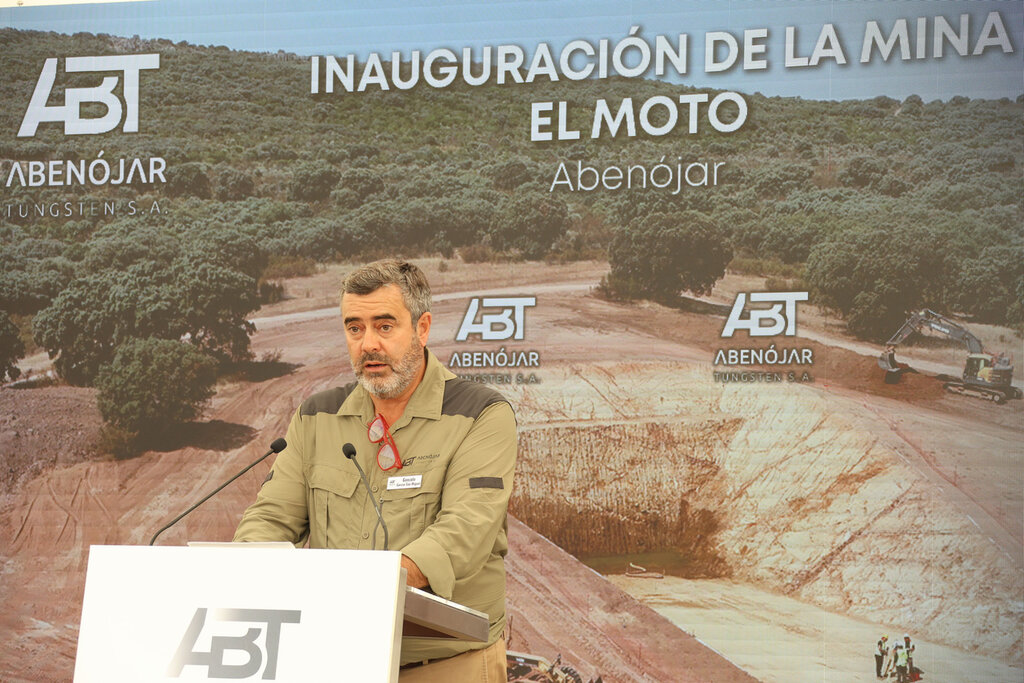
CEO Gonzalo García San Miguel at the inauguration of Abenójar's El Moto mine. Credit: Abenójar Tungsten
Spain’s El Moto takes a different approach
Gonzalo García San Miguel, the founder and CEO of Abenójar Tungsten, and chairman of MH, hopes to overcome these associated challenges and pitfalls to bring the El Moto mine into operation in 2029 to produce 423,000 metric tonne units (mtu) of WO₃ per year. Construction began on the underground element in early 2026.
Located in Ciudad Real, Spain, the mine consists of a large continuous bulk porphyry-type tungsten-gold system, with wolframite being the principal tungsten-bearing mineral. San Miguel says the deposit is hosted within granite, providing favourable geotechnical conditions and, in principle, good ground stability compared with other types of deposits and mining projects.
“Furthermore, the massive and disseminated nature of the mineralisation, as opposed to a vein-type deposit, represents an advantage from both a mining and processing perspective,” he says.
The mining method is planned as longitudinal exploitation of stopes by sub-levels and subsequent filling with paste. More than 600 stopes have been designed. For this type of mining, method jumbo drills, long-hole production drill rigs, LHD machines and underground mine trucks are typically used, but Garcia San Miguel says the company has not yet made a “definitive selection” on the equipment or provider but says “well proven extraction methods” will be used.
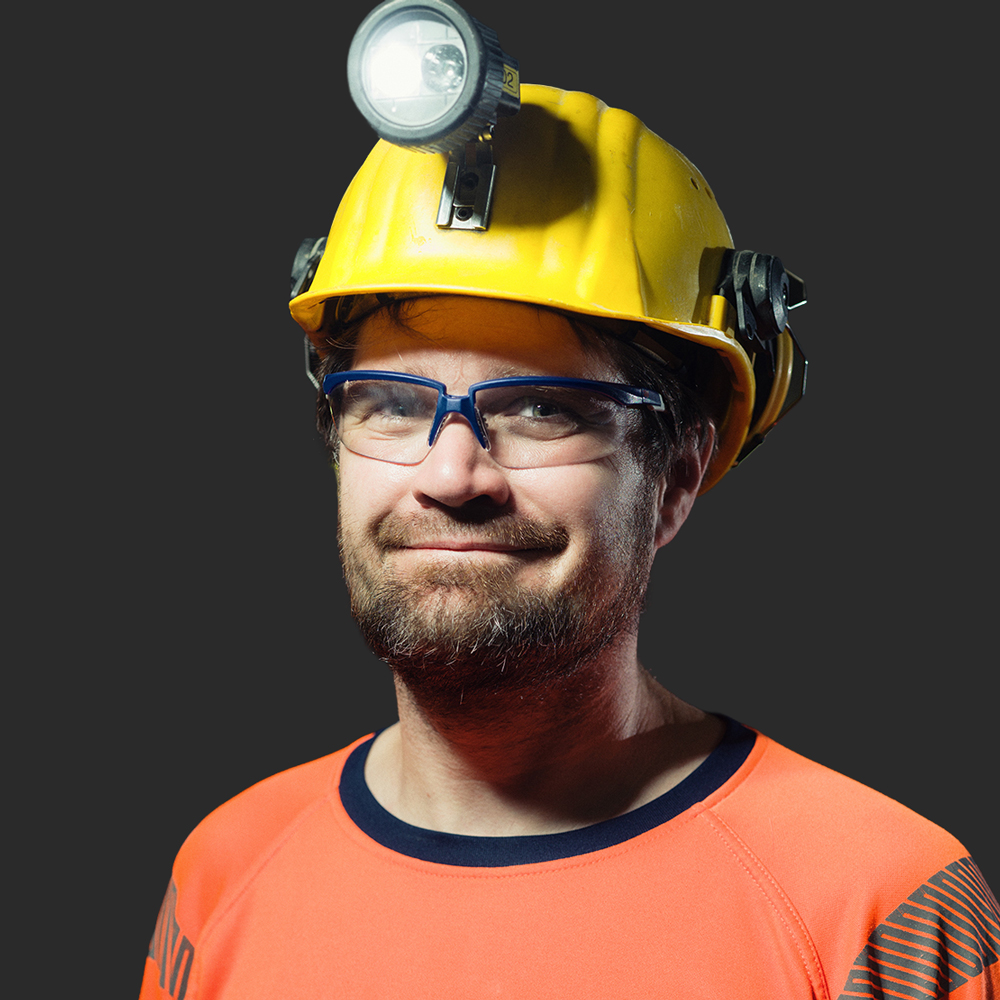
Stefan Eggenreich, mine manager at Wolfram Bergbau und Hütten. Credit: Sandvik
An ore processing facility planned for the site is designed to process 1.5 million tonnes of ore per annum at full capacity.
In terms of getting the project financed, Garcia San Miguel says the company is learning just how important timing is, as the West races to secure supplies of critical minerals.
“We have been involved with the El Moto project since 2012, at which time the tungsten price remained low enough to make the majority of western tungsten mines uneconomic,” he explains.
“Even without the price spike, El Moto remains one of the most competitive tungsten projects in the Western world. The 2026 definitive feasibility study confirmed it as a long-life, high-margin tungsten operation, with a post-tax internal rate of return of 62% based on a long-term tungsten price assumption of $1,415/mtu.”
Due to the grade and scale of the deposit, El Moto benefits from a larger production scale than any existing former China producers, he adds, with the direct cash cost required to produce one unit of metal being $218/mtu (€188/mtu) and an all in sustaining cost of €236/mtu.
To date, project development has been self-funded through Abenójar Tungsten, but the project was recently granted €12.6m in regional incentives and admitted to the European Raw Materials Alliance, which Garcia San Miguel says has helped accelerate the search for financing to fully develop the mine.
Austria’s Mittersill offers a working example
One tungsten mine that has operated successfully for more than 50 years is Mittersill, located in Salzburg, Austria. Operated by Wolfram Bergbau und Hütten, a Sandvik company, it is one of the largest scheelite tungsten mines in Europe and a rare example of a fully integrated tungsten operation.
Stefan Eggenreich, mine manager at Wolfram Bergbau und Hütten. Credit: Sandvik
Mittersill’s orebody dips steeply beneath a mountain and mineralisation is hosted in highly variable geology, with rock strengths ranging from soft talc zones with around 50 megapascal (mpa) to extremely hard, 350mpa, quartz-rich formations – conditions that place high demands on drilling accuracy, equipment durability and ground support. Its steep underground layout includes long development headings and haulage routes with gradients of up to 15%, adding to the demands on equipment.
Mine manager at Wolfram Bergbau und Hütten, Stefan Eggenreich, says engineering expertise and the targeted application of technology have helped the mine maintain efficiency, productivity and resource utilisation.
“Geological conditions have a significant impact on the way the mine is operated. As rock formations change, drilling and blasting plans must be continuously adapted to achieve optimal results,” he explains.
“Success depends not only on advanced equipment but also on highly skilled operators. Our teams must adjust machine settings and configurations to ensure efficient and reliable performance under changing conditions.”
Success depends not only on advanced equipment but also on highly skilled operators.
Frank Smith, Founder and CEO of TowHaul
Development drilling is carried out using Sandvik DD422i twin-boom jumbos, and for production drilling the Sandvik DL432 long-hole drill rig, which is well suited to the mine’s stoping methodology and steeply dipping orebody, according to Eggenreich.
Exploration drilling is also used to maintain geological confidence, with the mine completing around 5,000m of underground drilling each year to replenish reserves.
As the mine has moved deeper underground, investment in processing infrastructure has been key to improving operations by reducing haulage distances, lowering diesel consumption and improving material handling. Eight Sandvik Toro LH517 loaders operate across multiple levels, feeding ore passes that supply material to the underground crusher.
Furthermore, Eggenreich says ore sorting is a key part of the mine’s approach to improving feed quality and resource utilisation. In 2025, it deployed a new Sandvik CJ815 underground jaw crusher, located around 580m below surface. Ore is gravity-fed to the crusher and then transported 3.2km by conveyor to the concentrator on the opposite side of the valley.
“Locating crushing infrastructure closer to active mining areas reduces haulage distances, after which material can be transported more efficiently using conveyor systems,” says Eggenreich.
“We mine more than 500,000t of ore each year, so even relatively small efficiency improvements can have a meaningful impact across the operation.”
A conveyor belt transports the ore from the mine to a processing plant 3km down the valley at the Felbertauern Highway.
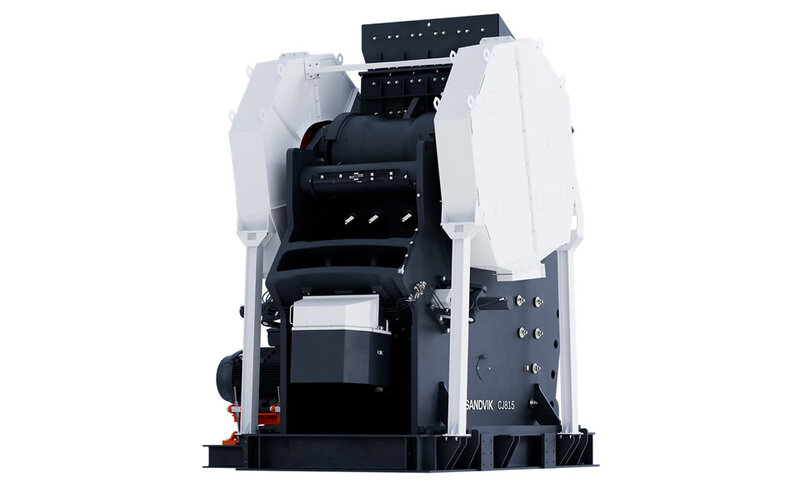
Sandvik's CJ815 underground jaw crusher. Credit: Sandvik
Its integration extends beyond mining and concentration, with Wolfram Bergbau und Hütten also producing tungsten powder and recycling tungsten. That downstream capacity is also being used to process material from elsewhere in Europe. In September 2026, WBH agreed to take at least 1,720t of contained WO₃ from Almonty Industries’ Los Santos tailings project in Spain under a multi-year offtake agreement, providing a route to market for tungsten recovered from existing mine waste.
Speaking about the mine, Parry-Jones, former global director of commercial at a Vietnamese tungsten producer that was the largest outside of China at the time, says being fully integrated and owning the refining step as well as the mining has been key for Mittersill.
“They need to own the mine because it enables them to sell the finished product, which is high margin,” he explains. “The struggle for a new mine is how do you get there? Doing the mining part is really challenging, very risky, doing the finished product part is extremely expensive and R&D [research and development]-intensive, and you have got to have the refining as well.”
10 facts about tungsten
Select the facts to read more
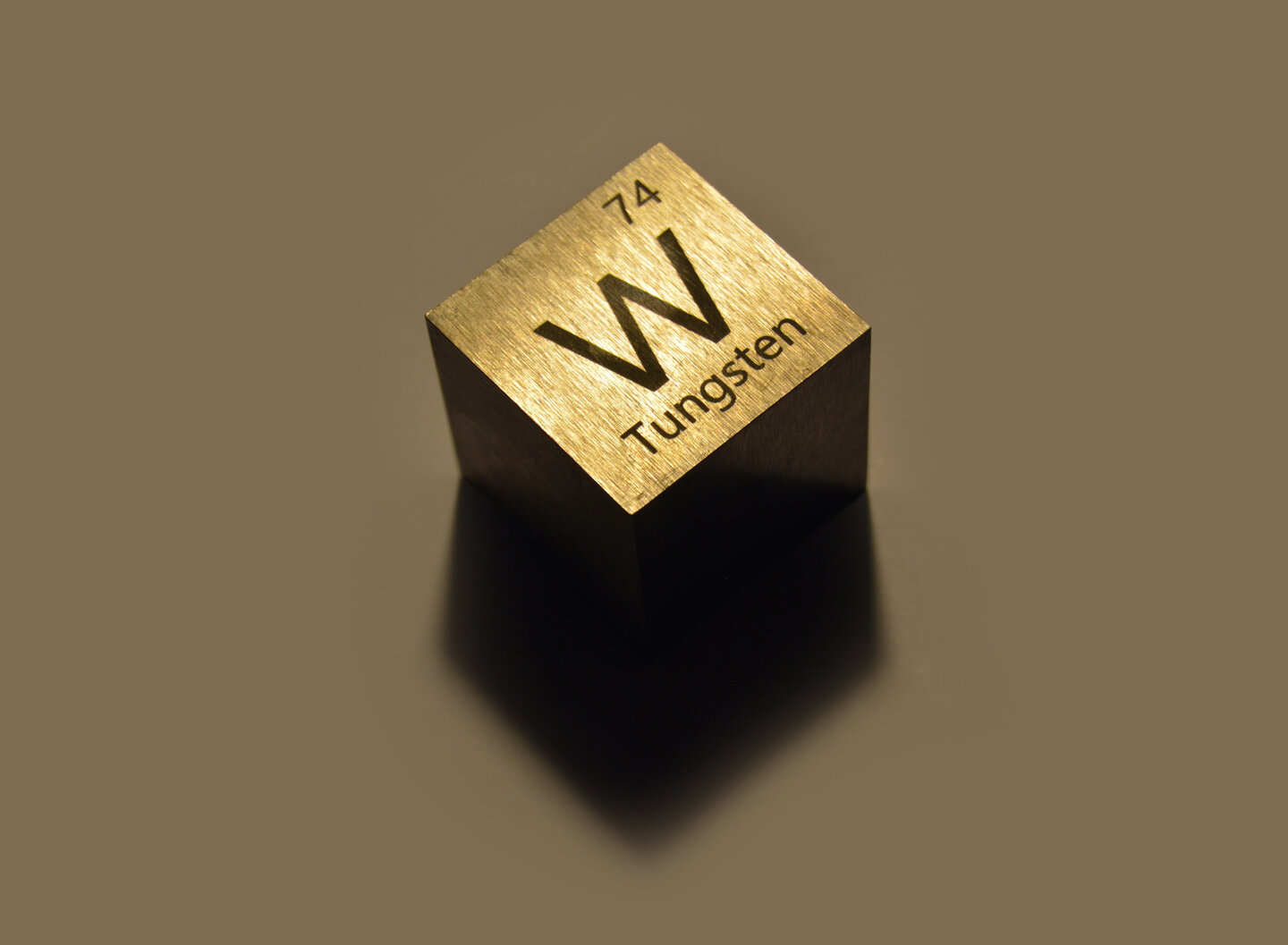
Atomic number: 74
Tungsten is a metallic chemical element with the symbol W.
Melting point: 3,414°C
Tungsten has the highest melting point of all metals.
Density: 19.3g/cm³
Tungsten is one of the densest metals.
Main ores: scheelite and wolframite
These are the principal minerals used for commercial tungsten production.
Major application: tungsten carbide
Its hardness and wear resistance make it important in cutting, drilling and mining tools.
China dominates supply
China is by far the world's largest tungsten producer and a major processor and consumer.
Strategic applications
Tungsten is used in mining and metalworking tools, aerospace, defence, electronics and high-temperature equipment.
International industry body: ITIA
The International Tungsten Industry Association tracks global tungsten mine production, supply and demand, including China's supply by product and destination.
Chinese industry body: CTIA
The China Tungsten Industry Association represents companies and organisations across China's tungsten mining, processing and manufacturing industries.
Tungsten pricing: MTU
International tungsten prices are commonly quoted in metric tonne units, with one mtu representing 10kg of contained WO3.
What comes next for Europe’s tungsten supply
China’s export controls are expected to remain in place, but the price surge that helped revive interest in European tungsten projects has proved volatile. On 12 October, Chinese wolframite concentrate prices had fallen 67.92% from their March peak, according to Shanghai Metals Market (SMM), while domestic ammonium paratungstate (APT) prices were down 67%.
The correction reflects not only supply restrictions but also weaker end-use demand, elevated smelter inventories and relatively ample fourth-quarter mining quotas, SMM reported. The result is an increasingly divided market, with Chinese domestic prices moving differently from those paid by Western buyers.
“We are already seeing signs it is coming off,” says Parry-Jones. "The Chinese domestic price has collapsed, because they can't export their surplus of production.”
The changing flow of material is also reflected in trade data: Chinese imports of tungsten concentrate rose by roughly 205% between 2023 and 2025, while concentrate exports fell to zero after the introduction of export controls, Fastmarkets reported.
The controls have also altered the relationship between domestic Chinese and international markets. Export licensing restrictions have made it harder to move material from the lower-priced domestic market into higher-priced international markets, weakening the price link between the two. Meanwhile, domestic demand and processing capacity continue to absorb material.
Furthermore, export controls only relate to raw materials, so the Chinese are now shipping finished products on a raw material cost basis that is a third of the Western cost basis.
Frank Smith, Founder and CEO of TowHaul
This has left Western buyers competing for a smaller pool of non-Chinese supply, increasing the incentive for Europe, North America and other allied markets to develop alternative supply chains. Those alternatives remain limited, however; China still accounts for roughly four-fifths of mined tungsten supply, while non-Chinese projects must develop both mining and downstream processing capacity to compete.
“Furthermore, export controls only relate to raw materials, so the Chinese are now shipping finished products on a raw material cost basis that is a third of the Western cost basis,” he adds.
He forecasts an oversupply in around three to four years but caveats that by saying “anything could happen that completely flips the story again”.
“But there will be clear winners – many of these projects will fall by the wayside.”
