
Comment
Coal’s 2026 shock came from outside the coal market
The Strait of Hormuz disruption has reshaped coal markets in 2026, and the outlook remains uncertain as 2027 approaches. GlobalData mining analyst Prasanna Aakula reports.
Powered by


Main image credit:
Coal’s 2026 story has been shaped by a disruption that has little to do with the sector itself. On 28 February, US and Israeli strikes on Iran triggered a wider energy-market shock as shipping through the Strait of Hormuz was disrupted.
Virtually no coal shipments pass through the waterway, but the resulting squeeze on oil and liquefied natural gas (LNG) supplies has raised gas prices and, in turn, supported coal demand, prices and trade.
The result underscores how coal demand is increasingly determined not only by coal-specific fundamentals but by shocks elsewhere in the global energy system.
The International Energy Agency (IEA) forecasts global coal demand will rise 1.2% in 2026, reaching a record 8.94 billion tonnes (bt) for the year, reversing its previous expectation of a slight decline. The agency attributes much of the change to higher gas prices following the disruption to LNG shipments through Hormuz, which has boosted greater coal-fired generation in markets including Europe, Japan, South Korea and China.
For 2027, the outlook could change quickly. The IEA forecasts coal demand will fall by 0.4% to 8.91bt if LNG flows recover and gas prices settle below 2026 levels, while prolonged disruption could push demand higher, according to its Coal Mid-Year Update 2026, published in September.
China’s supply cuts are amplifying the shock
China illustrates how the shock is interacting with domestic supply constraints. Safety inspections following a fatal mine accident in Shanxi in May 2026 have reduced production, tightened the domestic market and increased the need for imports. Bloomberg reported that Chinese coal output was down by 3.2% nationally through August and 13% in Shanxi. GlobalData expects China’s full-year coal production to fall 1.8% to 4.38bt in 2026, its first annual decline since 2016.
Bloomberg Intelligence expects the resulting coking-coal supply squeeze to persist into 2027, with additional imports from Mongolia, Australia and Russia helping to offset the shortfall. Because China is both the world’s largest coal producer and importer, domestic supply shortfalls rapidly ripple across seaborne markets.
Beijing’s agreement to buy at least ten million tonnes (mt) of US coal in 2027 and again in 2028 is notable, although modest in volume. Bloomberg notes that 10mt represents around 2% of China’s coal imports and only a small fraction of its roughly 5bt of annual consumption. GlobalData says that China imported 307.3mt of coal in 2025, while imports in the first seven months of 2026 were already 4.2% higher year on year. More important for the wider market is whether China remains an incremental buyer while domestic production recovers.
India shows how coal fills gaps in the power system
India reveals another way in which the gas and power shock is affecting coal demand. Weak hydropower and declining solar output after sunset have forced coal plants to compensate for gaps in electricity supply. Bloomberg reported that coal inventories at grid-connected Indian power stations had fallen to their lowest level in almost three years, while evening power shortfalls reached 7.7GW in September.
The episode shows that coal can fill gaps when other power sources fall short, ensuring that India remains an important coal market despite the growth of renewables. GlobalData expects Indian coal consumption to rise by 1.5% in 2026 to 1.25bt, with the power sector remaining the main source of demand. It also expects production to increase by 7.9% to 1.17bt.
Indonesia tightens supply just as regional demand rises
Government restrictions on mining quotas and tighter management of exports have reduced availability from Indonesia, the world’s largest coal exporter, while domestic coal consumption continues to climb, driven by energy-intensive industries such as nickel processing.
Bloomberg reported that Indonesian exports had fallen to a five-year low and that Chinese imports from Indonesia were down by 25% in 2026. GlobalData expects Indonesian production to fall by 13% in 2026 to 710.8mt, while domestic coal consumption is forecast to rise by 1.3% to 307.1mt. Higher gas prices mean tighter Indonesian coal supply could push Asian coal prices higher, as buyers have fewer alternatives.
Australia steps into the supply gap
The IEA notes that Australian producers appear best-placed to fill part of the gap created by lower Indonesian production. GlobalData expects Australian coal production to rise by 2.4% in 2026 to 470.4mt, although it forecasts production will decline over the longer term as mines close. The closures reflect Australia’s ongoing shift away from coal as part of its environmental policies aimed at reducing reliance on fossil fuels.
For mining operators, the core question is whether current price strength reflects a durable structural shift or an energy-shock windfall that will fade when gas logistics normalise.
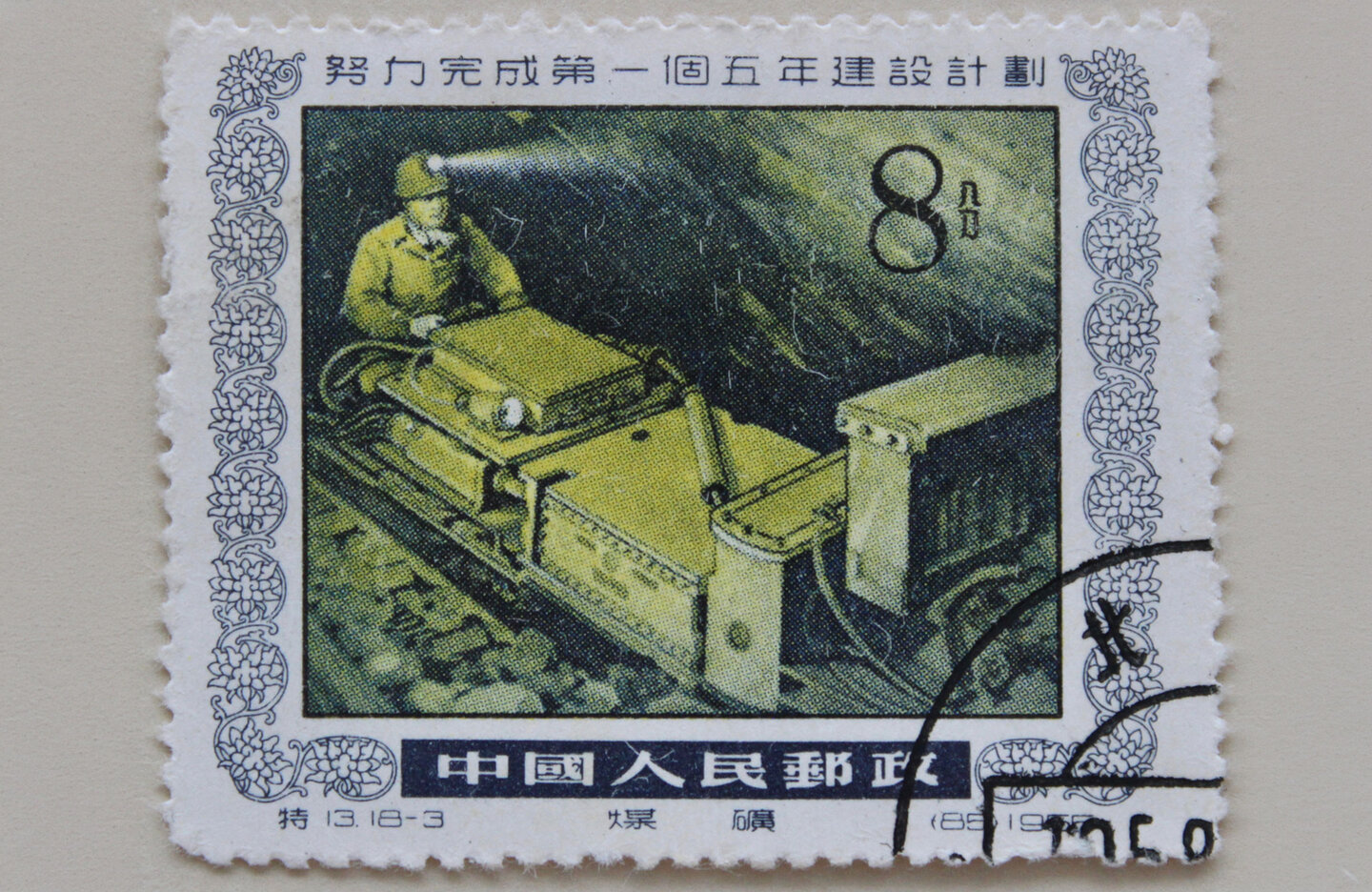
A postage stamp from China featuring a portrait of a coal miner, c.1955. Credit: YAROVA / Shutterstock.com
2027 coal demand will depend heavily on gas normalisation
The push and pull factors in 2027 are more complicated than a simple contest between coal and renewables. A recovery in LNG flows through Hormuz, continued renewable deployment and a gradual recovery in Chinese coal output would pull demand and trade lower. Prolonged gas market disruption, another weak hydrological season or sustained supply restrictions in Indonesia could pull in the opposite direction.
Reuters reported in early October that LNG shipments through Hormuz reached their highest monthly level since the conflict began in February, although flows remained well below pre-conflict levels.
Before the Hormuz-induced energy shock, coal’s long-term outlook was largely shaped by the drive to move power generation and steel-making away from coal. The disruption has added another layer, with energy security, gas prices and coal supply constraints now playing a more immediate role in the market.
