
Analyst Comment
Genesis-Vault deal reflects Australia’s changing gold growth story
Australia's gold recovery is set to continue, driven by new projects and strategic consolidation. Analysis by Prasanna Lakshmi.
Powered by


Main video: Gold from Newmont’s Tanami operation was transported to Sydney, where ABC Refinery refined and prepared the metal used to make the 2026 Melbourne Cup trophy. Credit: ABC Bullion
Australia's gold industry is entering a period of both production growth and corporate consolidation.
The agreed Genesis-Vault merger, announced in July, exemplifies how producers are seeking scale as national output recovers. While the transaction will create the country's third-largest listed gold producer, it also reflects broader structural trends shaping the industry: rising production, a growing pipeline of new projects and an increasing emphasis on operational scale.
Production returns to growth
Australia's gold mine production rebounded strongly in 2025, rising by 8.9% after four consecutive years of decline, and returning to levels last seen in 2018. According to GlobalData analysis, the recovery was driven by a combination of mine expansions, project ramp-ups and new operations entering production, demonstrating that output growth is increasingly being delivered through operational execution rather than major new discoveries.
Among the strongest contributors was Greatland Gold's acquisition of the Telfer mine, which extended the operation's productive life while increasing extraction capacity.
Production was also supported by sequential ramp-ups at Kal East Gold (Black Cat Syndicate), Cue (Westgold Resources), Bellevue Gold and the Admiral Open Pit (Vault Minerals), together with higher milling volumes at the St Ives Complex (Gold Fields).
The restart of the Paulsens project (Black Cat Syndicate) and higher-grade underground mining at NorthParkes (CMOC Group/Sumitomo) and Davyhurst (Ora Banda Mining) further strengthened national output, while seven newly commissioned projects – Boorara (Brightstar Resources), Castle Hill (Evolution Mining), Crown Prince (New Murchison Gold), Federation Underground (Aurelia Metals), Jupiter (Catalyst Metals), Murchison (Meeka Metals) and Trident Chariot (Genesis Minerals) – collectively contributed more than 132,000oz during 2025.
Consolidation gathers pace
This improving production backdrop provides important context for the Genesis-Vault merger. Under the agreed merger, Genesis Minerals will acquire Vault Minerals in a deal valued at approximately A$12.6bn ($8.88bn), creating a company expected to produce between 600,000oz and 700,000oz of gold annually. Once completed, the enlarged group will become Australia's third-largest listed gold producer, behind only Northern Star Resources and Evolution Mining, with all of its operations concentrated in Western Australia.
The transaction illustrates how producers are increasingly pursuing growth through consolidation alongside organic expansion. Australia's production recovery has been driven by numerous individual projects, but combining complementary asset portfolios offers another route to improving efficiency, extending mine lives and strengthening long-term production profiles. Genesis has said the merger could unlock approximately A$2bn in post-tax operational synergies, largely through optimisation of nearby assets in the Leonora and Bardoc-Mount Monger regions.
The outlook for Australian gold production remains positive. GlobalData forecasts that national output will grow by a further 4% during 2026, supported by a fresh wave of project developments including Kirkalocka (Gylden Resources), Challenger Restart (Barton Gold), Mount Morgan (Great Divide Mining) and Hillgrove Restart (Larvotto Resources).
Production will also benefit from continued ramp-ups at projects commissioned during 2025, including Castle Hill, Chariot, Crown Prince, Federation Underground, Jupiter, Murchison and Paulsens Restart (Black Cat Syndicate).
Operational improvements at established mines, notably the Kalgoorlie mill expansion and ongoing upgrades at Telfer, are expected to provide additional support.
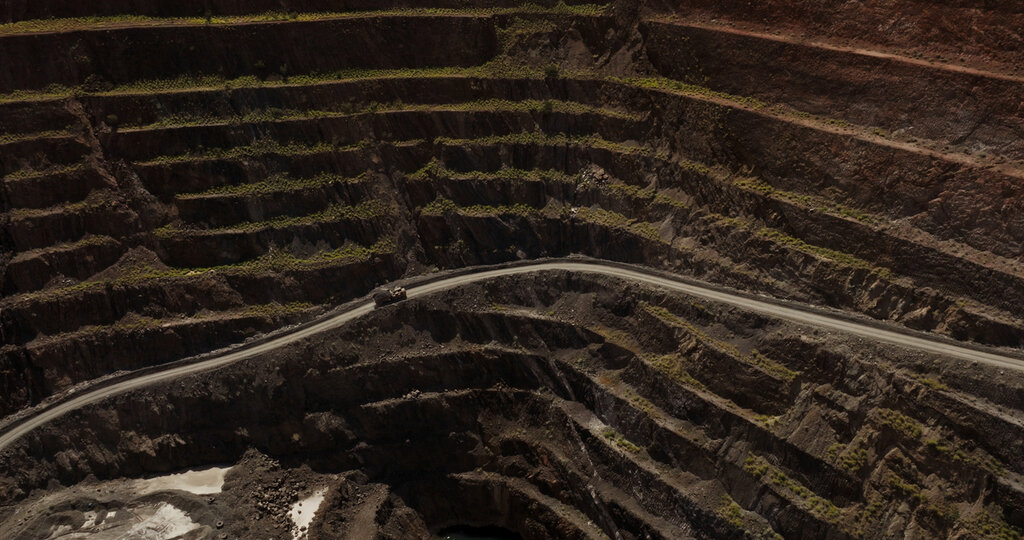
Newmont's Tanami mine is expected to remain a key contributor to Australia's gold production despite declining ore grades. Credit: ABC Bullion
However, growth is unlikely to be uniform across the sector. Higher output from new and expanding mines will be partly offset by declining grades, mine sequencing and planned closures at several established operations. GlobalData expects lower production from Newmont's Cadia operation owing to planned mining of lower-grade sections of the orebody, while Northparkes (CMOC Group/Sumitomo) will temporarily shift towards more copper-dominant ore zones.
Declining grades at Tanami (Newmont), together with planned closures at Mount Rawdon (Evolution Mining), Boora Gold (Brightstar Resource), Osborne (Aeris Resources) and Penny (Ramelius Resources), will also weigh on overall production. Vault Minerals' Deflector Gold Project is likewise approaching the end of its mine life later this decade.
Expansion tempered by mature mines
Over the longer term, Australia's gold industry is forecast to continue expanding, albeit at a more measured pace. GlobalData projects mine production will increase at a compound annual growth rate of 1.1% between 2026 and 2035, supported by nearly 60 planned developments.
Major projects including the Tanami Expansion, Havieron (Greatland Gold), Bullabulling (Mineral Resources), Hemi Gold (De Grey Mining/Northern Star) and the Olympic Dam Expansion (BHP) are expected to underpin future growth, although these additions will be partially offset by the eventual depletion and closure of several mature operations.
Given these developments, the Genesis-Vault merger appears less an isolated transaction than a reflection of the direction Australia's gold industry is taking. As production increasingly depends on optimising existing assets while bringing a steady pipeline of new projects online, larger, more diversified producers may be better positioned to manage operational risk and sustain output through commodity cycles.
The Genesis-Vault transaction does not alter Australia's production outlook, but it illustrates how producers are responding to it. As mature operations face declining grades and producers seek to optimise existing assets, scale, portfolio optimisation and regional consolidation are becoming increasingly important, alongside organic production growth.
Beyond mine production, Australia's gold industry also supports a growing domestic downstream sector. Gold from Newmont's Tanami mine was recently refined in Sydney by ABC Refinery and crafted into the 2026 Lexus Melbourne Cup, illustrating how Australian gold continues to generate value through refining and advanced manufacturing as well as extraction.
