
Opinion
How robotics and automation are building the mine of the future
Mining engineering professor Steve Schafrik and Epiroc's Brad Baillio discuss robotics' expanding role in safer, more productive mines.

Main video credit: Shutterstock.AI
Walk through a modern mine today and you will find some of the largest and most complex robotics in the world.
Autonomous haul trucks move material around the clock. Remote-controlled drilling equipment operates in hazardous areas without exposing people to danger, while collision-avoidance systems help operators navigate increasingly complex environments.
While these technologies often capture attention because of how advanced they are, their real value is much more practical.
Robotics and automation are changing how mines approach safety, productivity and workforce development, not by replacing people but by allowing them to contribute where their expertise has the most impact.
The underlying principle is simple: safer mines start with smarter machines.

Steve Schafrik of the University of Kentucky is past chair of the Society for Mining, Metallurgy & Exploration's (SME) automation and robotics committee.

Brad Baillio of Epiroc is vice-chair of SME's automation and robotics committee.
Engineering safer, more productive operations
Mining has always involved work in environments where risk cannot be perfectly predicted. Automation offers an opportunity to remove many of those risks before workers are ever exposed to them.
Rather than replacing human expertise, robotics captures it and extends it through mechanical, hydraulic, pneumatic and electronic systems that perform repetitive or hazardous tasks more safely and consistently. Jobs that once required physically demanding manual labour are now completed by increasingly intelligent machines, allowing workers to move into higher-value roles.
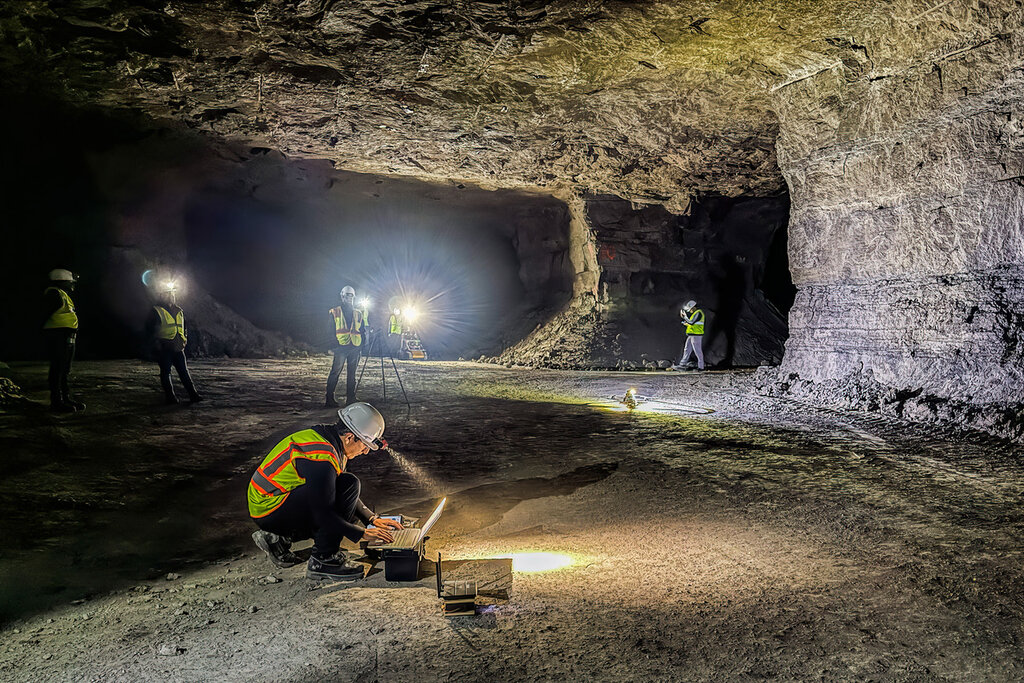
Underground mapping with terrestrial and aerial robotics. Credit: Richard Bishop/SME
Some of the biggest gains come from removing employees from repetitive and dangerous assignments. Driving the same haul route for a ten or 12-hour shift, for example, is mentally demanding and contributes to fatigue. Autonomous systems allow those workers to supervise operations, manage fleets or support maintenance, rather than spending long hours on repetitive tasks. The result is both safer operations and more consistent performance.
Small improvements create big results
The efficiency benefits of automation rarely come from one revolutionary breakthrough. Instead, they are built through dozens of incremental improvements that compound over time.
Mining's mineral processing facilities illustrate this well. Many processing plants already operate with minimal on-site staffing, relying on automation while workers focus primarily on supervision and maintenance. Those same capabilities are now extending into mobile equipment.
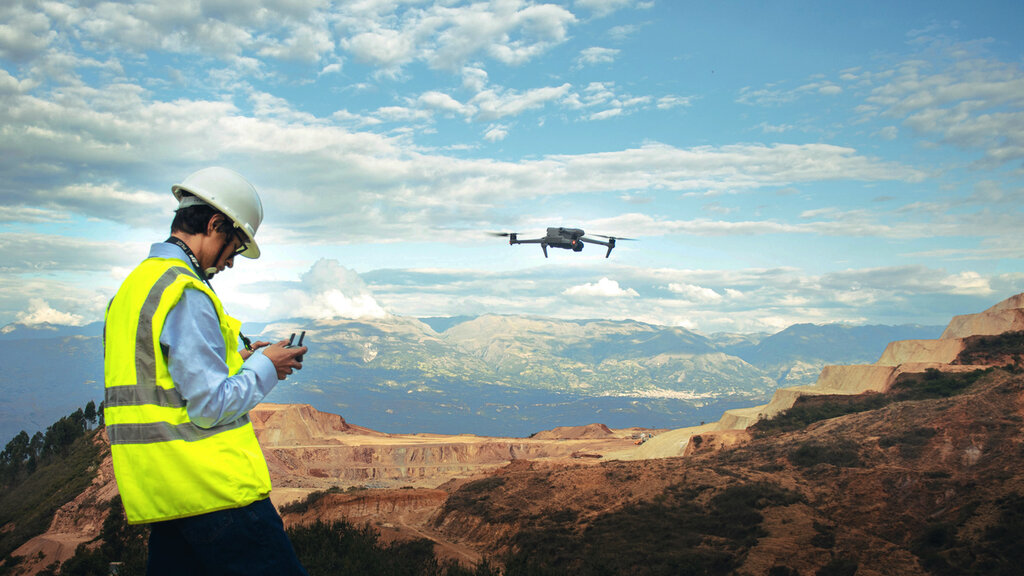
Through aerial technology and human expertise, modern mining gains precision, safety and efficiency – transforming how we understand and manage operations from above. Credit: Maribel Durand Fernández/SME
Today's haul trucks continuously optimise traction and braking. Modern shovels automatically prevent overload conditions and tipping while improving digging precision. Fleet monitoring systems compare machine performance across entire operations, helping to identify maintenance needs before failures occur while generating valuable data for operator training.
Automation also creates consistency. Instead of productivity varying significantly between shifts or operators, automated systems help stabilise performance into more predictable operating cycles. That predictability reduces downtime, improves maintenance planning and gives operations more reliable performance data for decision-making.
Many automated mines now rely on centralised control centres located away from the mine itself. These facilities allow employees to monitor equipment, respond to operational issues,and coordinate production from significantly more comfortable environments.

Many automated mines now rely on centralised control centres located away from the mine itself.
Frank Smith, Founder and CEO of TowHaul
Maintenance teams are developing new expertise in electronics, sensors, hydraulics and software alongside traditional mechanical skills.
Today's robotics systems are possible because each generation of automation builds on the last. Advancements in sensors, communications networks and computing continue expanding what mining equipment can do, including operating safely in GPS-denied underground environments.
One of the most impactful examples is the rapid adoption of collision avoidance systems. By combining improvements in sensing and machine communications, these technologies help operators maintain situational awareness while reducing the likelihood of equipment interactions in busy mining environments.
As sensor technology and navigation systems continue to improve, mines will be able to automate more complex tasks while maintaining the high safety standards the industry demands.
Lessons that extend beyond mining
Mining became an early adopter of robotics because it already operated in highly controlled environments with rigorous safety procedures and standardised processes. Those conditions made it an ideal place to introduce automation responsibly.
Those conditions made it an ideal place to introduce automation responsibly.
The industry's experience now offers lessons for sectors ranging from agriculture to construction. Many of the operational challenges – equipment utilisation, worker safety and productivity – are remarkably similar, meaning technologies first developed for mining can often be adapted elsewhere.
The broader lesson is that automation succeeds when organisations focus on solving practical operational challenges rather than adopting technology for its own sake. Small, measurable improvements accumulate into significant gains over time.
Mining has demonstrated that robotics is not simply about smarter machines. It is about creating safer operations, more efficient supply chains and higher-value careers for the people who keep those systems running.
Title
With diesel vehicles accounting for 30% to 50% of greenhouse emissions at a mine site, replacing them with a battery-electric fleet is a sure way to drastically reduce overall CO2 emissions, but how else can mines benefit from this technology?
Leading underground manufacturers Normet believe the answer lies with SmartDrive. This architecture for battery electric vehicles (BEV) was developed in collaboration with customers, building on feedback, predicting future trends, and assessing the limitations of diesel engines, and comes with a wealth of benefits for operators.
Title
TowHaul Lowboys are front loading which is crucial for three main reasons:
Speed – the Gooseneck can connect and disconnect in as little as 90 seconds
Safety – the full width of the lowboy rests on the ground providing a wide, stable loading platform
Versatility – the multi-purpose gooseneck can be used to tow disabled haul trucks or other specialty TowHaul trailers (Dragline Bucket Transporter or Water Tank Carrier)
The “Low-Profile” designation refers to the load ramps of the lowboy which are designed in such a way as to reduce the “breakover” as the equipment transitions from the ramps to the lowboy deck.
The “Modular” aspect refers to how the lowboys are designed, manufactured and shipped. Each module is easier to handle and ship which substantially lowers shipping costs for our clients, especially those overseas. Once onsite, the modules are pinned together which minimizes installation time (3-5 days).

TowHaul Lowboys utilize a single, haul-truck type axle. TowHaul offers a dry drum brake configuration or a wet brake configuration with TowHaul’s patented Brake Cooling System.
Frank Smith, Founder and CEO of TowHaul
TowHaul Lowboys utilize a single, haul-truck type axle. TowHaul offers a dry drum brake configuration or a wet brake configuration with TowHaul’s patented Brake Cooling System. Using a single axle eliminates tire “skidding” often found with multi-axle trailers when turning on a sharp corner. This “skidding” can cause tire and axle damage leading to downtime. Recognizing the variety of conditions in which mines operate, TowHaul has designed specific lowboy configurations tailored to operate more effectively in specific areas. For example, there are several TowHaul Lowboys currently operating in the unique conditions found in the oil sands of northern Alberta designed with a specific Oil Sands Configuration.
To cope with the extreme ambient temperatures found in Western Australia, TowHaul upgraded the patented Brake Cooling System for our 450-ton capacity lowboys to improve the cooling of the oil in those systems.
Mining industry needs clarity
Macfarlane has been critical of taxation policy in the past, branding it a ‘threat’ to mining in and suggesting it puts the local sector at a disadvantage compared with other regional sectors across the country.
“Coal royalties in Queensland are the highest in the country and more than double the rate of New South Wales. Latest figures show the resources industry is delivering A$5.2bn to the State Budget in royalty taxes, including A$4.36bn from coal. These are record returns and they show the importance of the resources sector to the state budget. We have asked for certainty about royalty tax rates to ensure stability for long-term investments and the jobs they create.”
In early June 2019, mining companies avoided increases to royalties by agreeing to provide A$70m to a A$100m infrastructure fund.
Frank Smith, Founder and CEO of TowHaul
In early June 2019, ahead of Queensland’s State Treasurer Jackie Trad’s budget, mining companies avoided increases to royalties by agreeing to provide A$70m to a A$100m infrastructure fund. The move means coal royalties will be frozen for three years.
“We have welcomed the commitment from the Queensland Opposition to freeze royalty tax rates for 10 years, and we’d like to see a similar commitment from the Government,” says Macfarlane. “We want to keep employing more Queenslanders and supporting more regional communities through local investment. To do that, it’s essential that we have clear and transparent rules and regulations,” he adds.
Will politics continue to support mining?
Politics and mining often overlap - unsurprisingly given the value of the sector to the wider Australian economy. That was on display during the recent federal election, which saw the industry used as a political tool– particularly Adini’s controversial Carmichael coal mine in the Galilee Basin.
However, the re-election of Scott Morrison as prime minister was welcomed by many within mining, and the almost complete annihilation of Labor’s vote in the state sent a clear message to politicians about how Queenslanders view the sector. Before the election Labor had failed to take a meaningful position on the project but appeared likely to oppose it. The party suffered heavy losses, hampering its ability to have a significant say at a state level. Olive Downs is a case in point, just days after the vote Queensland’s government gave final approval to the project, which had been stuck for years.
Keen to stress the need for a broad political approach to mining, Macfarlane says: “The QRC works with all sides of politics constructively, including the re-elected Coalition Government in Canberra. The Government has been a strong supporter of the resources sector through the Prime Minister and Resources Minister Matt Canavan.
Phillip Day. Credit: Scotgold Resources
“The resources industry has also welcomed the appointment of Joel Fitzgibbon to the shadow resources portfolio. We want to see bipartisan support for the resources sector and the regional jobs it creates. We want to see the Government and the Parliament focus on attracting new investment to create new jobs well into the future.”
Queensland’s mining industry is a vital part of the economy and has a promising future. However, nothing can be taken for granted and business, politicians, and local communities need to be ahead of the issues the future may bring MacfarlaneWe must embrace technology to stay globally competitive, compete for every contract and earn the support of our governments and the people who elect them. believes.
“Our sector makes up almost 20% of the Queensland economy but we must not get complacent. We must embrace technology to stay globally competitive, compete for every contract and earn the support of our governments and the people who elect them,” he finishes.
