Feature
Breaking down silos: improving coordination in autonomous mining
Autonomous trucks, drills and drones are proliferating, but coordinated intelligence may define mining's next automation frontier. Alejandro Gonzalez reports.

Main video credit: Shutterstock.AI
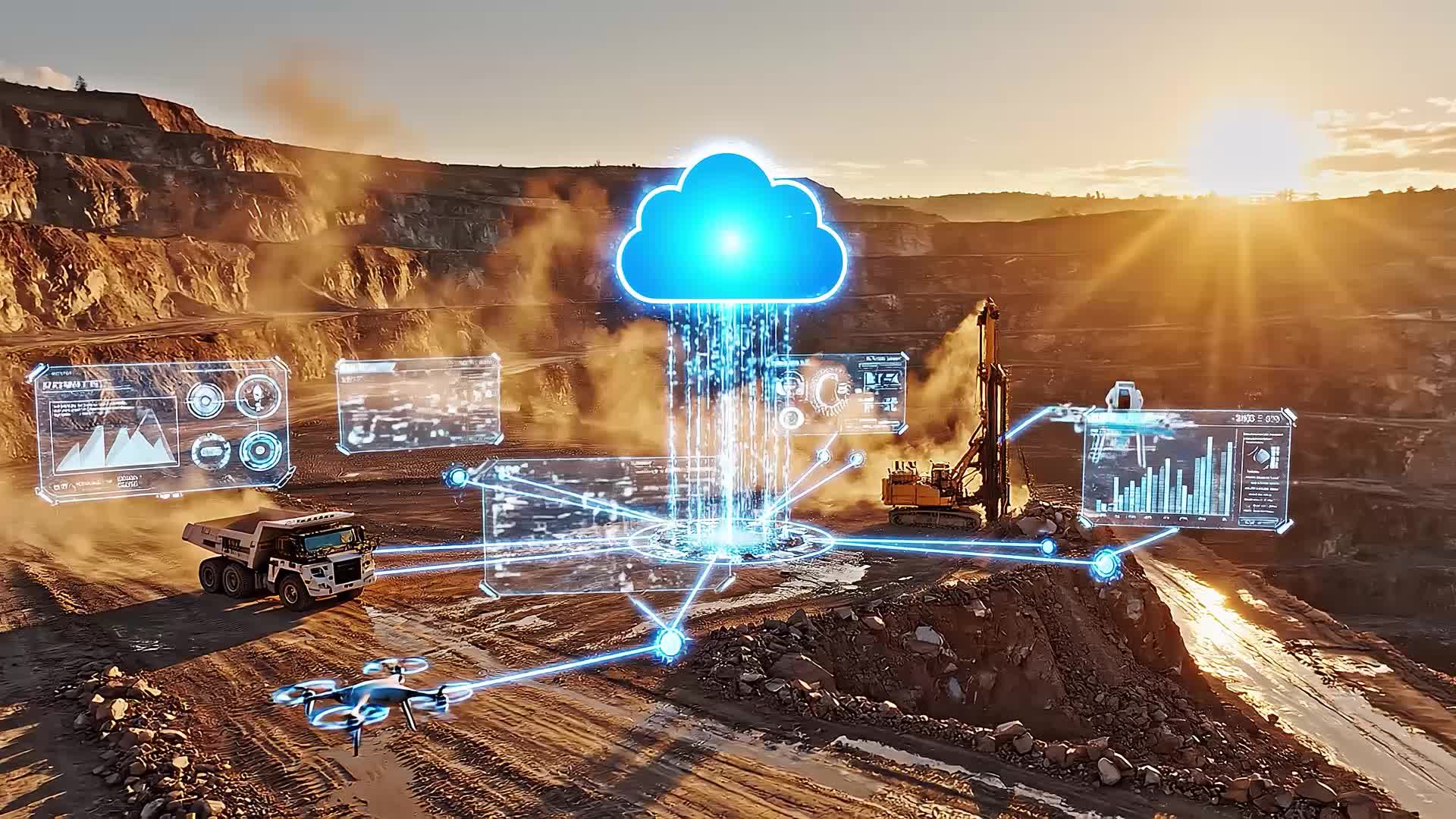
Mining has spent much of the past decade automating individual tasks. Driverless haul trucks now transport ore continuously across some of the world's largest open pits. Autonomous drill rigs execute blast plans with centimetre precision. Inspection drones survey pit walls, stockpiles and haul roads faster than conventional surveying methods, while AI increasingly supports predictive maintenance, dispatch and safety monitoring.
Yet despite those advances, much of that automation remains fragmented.
A haul truck may optimise its own route without knowing that a drone has detected changes to pit geometry. A maintenance platform may predict equipment failure without sharing that information with fleet dispatch software. Each system performs its designated function efficiently but often with limited awareness of the wider operation.
Autonomous mining has reached its next challenge
Industry observers increasingly see fragmentation as the next great challenge for mining automation. GlobalData’s recent report, Autonomous Mining: Unlocking Innovation and Competitive Advantage, identifies a transition towards “fully integrated, AI-driven fleet orchestration”, combining sensor fusion, predictive maintenance, volumetric modelling and safety automation. The report argues that rapid advances in vehicle control systems and precision machine automation are shifting the industry’s focus from autonomous machines towards more integrated mine-wide operations.

They identify data integration, interoperability and real‑time synchronisation as the principal technical barriers to wider deployment.
Frank Smith, Founder and CEO of TowHaul
Academic research points in the same direction. In their review of 68 studies examining AI-driven digital twins in mining, Shouki A. Ebad and colleagues argue that existing research remains “scattered across isolated applications rather than unified frameworks”, limiting the industry’s ability to coordinate decisions across whole mining operations. They identify data integration, interoperability and real-time synchronisation as the principal technical barriers to wider deployment.
Lelio Di Martino, general manager of cognitive critical operations at Nokia, echoes that the industry has reached “an inflexion point” where the limiting factor is no longer the capability of individual autonomous machines, but the ability of entire mining operations to make coordinated decisions.
Although individual systems have become highly capable at the tasks they were designed to perform, he notes that “the operation is not a single system". Operational knowledge remains disctributed across systems designed to solve individual problems rather than optimise the whole operation.
The next opportunity, he argues, lies in enabling all operations to function as part of a common decision-making process.
Credit: Parilov / Shutterstock.com
Learning from operators, not algorithms
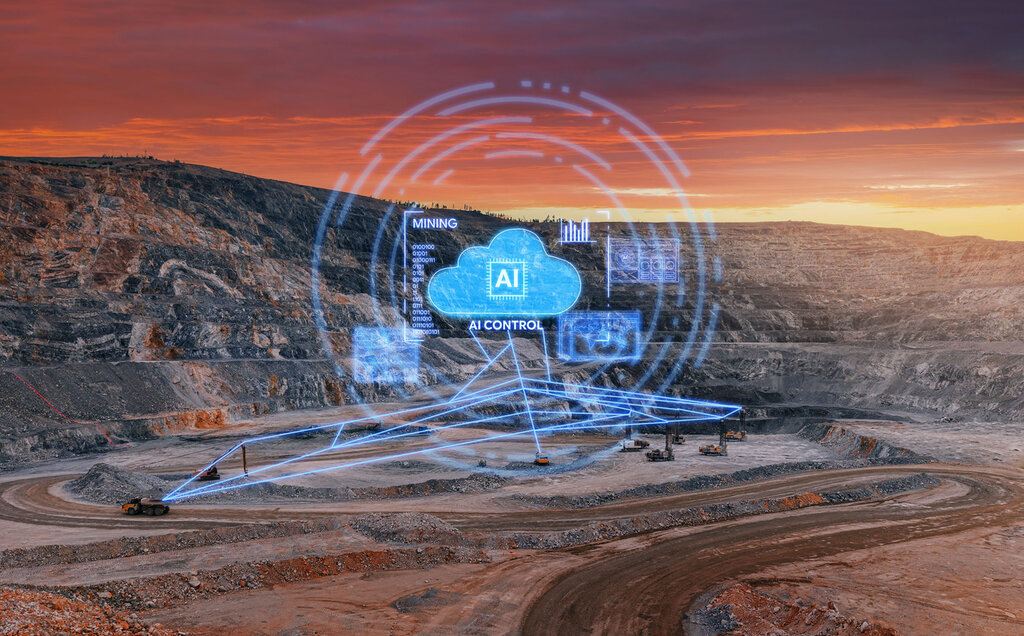
That thinking underpins Nokia’s broader vision for the future of autonomous mining. Rather than replacing existing autonomous equipment, Di Martino envisages an intelligence layer capable of combining information from communications networks, sensors, edge computing and operational software into a continuously updated operational picture.
As he argues, industrial organisations have become highly connected without necessarily becoming intelligent, because operational knowledge remains distributed across systems designed to solve individual problems rather than optimise the wider operation.
Di Martino traces its origins to visits to operating mines by researchers from Nokia Bell Labs in 2022. Rather than demonstrating technology, the researchers spent time observing how experienced supervisors made operational decisions.
Those decisions, he recalls, often relied on practical knowledge accumulated over decades rather than information generated by digital systems.
Frank Smith, Founder and CEO of TowHaul
Those decisions, he recalls, often relied on practical knowledge accumulated over decades rather than information generated by digital systems.
One example involved deciding when water trucks should be deployed to suppress dust. Another concerned the scheduling of fuel trucks, where several haul trucks could end up waiting simultaneously because refuelling decisions were being made independently of wider production priorities.
The researchers concluded that no individual software application possessed enough information to optimise those processes.
Understanding vehicle fuel levels alone was insufficient. Just monitoring the refuelling station was equally inadequate. Only by combining information from multiple operational systems could better decisions be made.
That experience fundamentally changed the scope of the project.
“Network is only the smallest component of this,” Di Martino says, describing communications infrastructure instead as “the glue” linking operational intelligence.
Rather than focusing solely on faster connectivity, the research evolved towards understanding how AI could synthesise information already available across the mine.
When drones influence trucks
The practical implications become clearer when considering autonomous drones, says Di Martino.
Many mines already deploy drones equipped with light detection and ranging and high-resolution cameras to survey pit walls, monitor slope stability and calculate stockpile volumes. However, those surveys often remain separate from day-to-day operational decision-making.
By the time survey data has been processed, interpreted and distributed, blasting may already have altered the mine.
Instead, Di Martino envisages information flowing immediately into a shared operational intelligence layer.
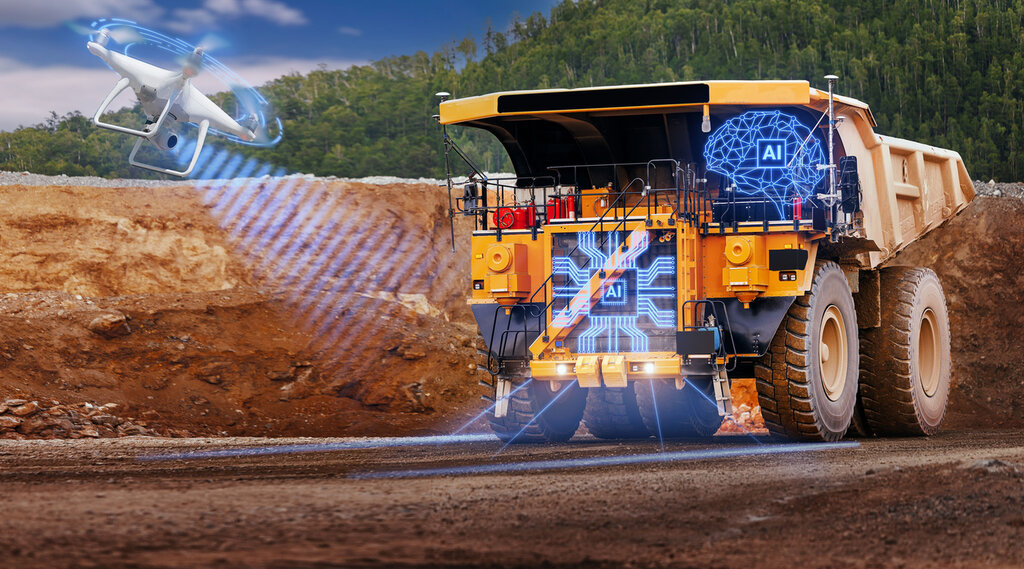
Fresh drone surveys identifying approximately 150,000t of newly blasted rock could automatically update the mine’s digital representation. Dispatch systems could immediately calculate the number of haul trucks required, identify where those vehicles were currently operating and recommend revised haul routes based on the latest terrain.
Credit: Parilov / Shutterstock.com
The objective is not simply to automate trucks or drones individually but to enable one autonomous system to influence another without requiring manual intervention.
That mirrors broader developments in digital twin research. Ebad and colleagues describe digital twins as creating a continuous feedback loop that enables real-time monitoring, predictive analysis and decision support, evolving beyond traditional simulations towards operational optimisation.
Di Martino believes mining operations are moving towards that same model, enabling information generated in one part of the operation to influence decisions elsewhere through continuously shared operational intelligence.
Intelligence at the edge
Another important aspect of Di Martino’s vision is where those decisions occur. Di Martino uses driver fatigue monitoring as an illustration.
Conventionally, video captured inside a haul truck may be transmitted to a remote control centre, where operators determine whether a warning represents genuine fatigue or a false alarm.
Instead, Di Martino envisages AI inference being performed directly on edge computing hardware installed within the vehicle, reducing response times from minutes to milliseconds while reducing network traffic.
The same principle extends to predictive maintenance. Rather than analysing individual vehicles in isolation, Di Martino describes comparing vibration patterns across multiple haul trucks to distinguish between mechanical faults, deteriorating haul roads and changes in loading practices.
A continuously updated digital twin becomes less a visual representation of the mine and more an operational model capable of identifying emerging problems before they affect production.
Frank Smith, Founder and CEO of TowHaul
A continuously updated digital twin becomes less a visual representation of the mine and more an operational model capable of identifying emerging problems before they affect production.
That ambition remains technically challenging, however Ebad and colleagues identify data integration, interoperability and real-time synchronisation as the main barriers to AI-driven digital twins, suggesting that connecting autonomous systems may prove as difficult as developing them.
Likewise, GlobalData’s assessment of innovation trends indicates that AI-enabled fleet orchestration, integrated worksite management and sensor fusion are becoming increasingly important areas of development alongside the deployment of autonomous vehicles themselves.
Whether such an approach can deliver on its promise will depend on how effectively mining companies overcome those technical challenges across heterogeneous operating environments.
Ebad and colleagues describe AI-driven digital twins as “a fundamental shift in mining engineering, where data is no longer a byproduct but a core asset for real-time safety and environmental optimisation”.
Mining’s first automation revolution focused on making individual machines autonomous. The next, Di Martino argues, will be judged by how effectively those machines work together.
Title
With diesel vehicles accounting for 30% to 50% of greenhouse emissions at a mine site, replacing them with a battery-electric fleet is a sure way to drastically reduce overall CO2 emissions, but how else can mines benefit from this technology?
Leading underground manufacturers Normet believe the answer lies with SmartDrive. This architecture for battery electric vehicles (BEV) was developed in collaboration with customers, building on feedback, predicting future trends, and assessing the limitations of diesel engines, and comes with a wealth of benefits for operators.
Title
TowHaul Lowboys are front loading which is crucial for three main reasons:
Speed – the Gooseneck can connect and disconnect in as little as 90 seconds
Safety – the full width of the lowboy rests on the ground providing a wide, stable loading platform
Versatility – the multi-purpose gooseneck can be used to tow disabled haul trucks or other specialty TowHaul trailers (Dragline Bucket Transporter or Water Tank Carrier)
The “Low-Profile” designation refers to the load ramps of the lowboy which are designed in such a way as to reduce the “breakover” as the equipment transitions from the ramps to the lowboy deck.
The “Modular” aspect refers to how the lowboys are designed, manufactured and shipped. Each module is easier to handle and ship which substantially lowers shipping costs for our clients, especially those overseas. Once onsite, the modules are pinned together which minimizes installation time (3-5 days).

TowHaul Lowboys utilize a single, haul-truck type axle. TowHaul offers a dry drum brake configuration or a wet brake configuration with TowHaul’s patented Brake Cooling System.
Frank Smith, Founder and CEO of TowHaul
TowHaul Lowboys utilize a single, haul-truck type axle. TowHaul offers a dry drum brake configuration or a wet brake configuration with TowHaul’s patented Brake Cooling System. Using a single axle eliminates tire “skidding” often found with multi-axle trailers when turning on a sharp corner. This “skidding” can cause tire and axle damage leading to downtime. Recognizing the variety of conditions in which mines operate, TowHaul has designed specific lowboy configurations tailored to operate more effectively in specific areas. For example, there are several TowHaul Lowboys currently operating in the unique conditions found in the oil sands of northern Alberta designed with a specific Oil Sands Configuration.
To cope with the extreme ambient temperatures found in Western Australia, TowHaul upgraded the patented Brake Cooling System for our 450-ton capacity lowboys to improve the cooling of the oil in those systems.
Mining industry needs clarity
Macfarlane has been critical of taxation policy in the past, branding it a ‘threat’ to mining in and suggesting it puts the local sector at a disadvantage compared with other regional sectors across the country.
“Coal royalties in Queensland are the highest in the country and more than double the rate of New South Wales. Latest figures show the resources industry is delivering A$5.2bn to the State Budget in royalty taxes, including A$4.36bn from coal. These are record returns and they show the importance of the resources sector to the state budget. We have asked for certainty about royalty tax rates to ensure stability for long-term investments and the jobs they create.”
In early June 2019, mining companies avoided increases to royalties by agreeing to provide A$70m to a A$100m infrastructure fund.
Frank Smith, Founder and CEO of TowHaul
In early June 2019, ahead of Queensland’s State Treasurer Jackie Trad’s budget, mining companies avoided increases to royalties by agreeing to provide A$70m to a A$100m infrastructure fund. The move means coal royalties will be frozen for three years.
“We have welcomed the commitment from the Queensland Opposition to freeze royalty tax rates for 10 years, and we’d like to see a similar commitment from the Government,” says Macfarlane. “We want to keep employing more Queenslanders and supporting more regional communities through local investment. To do that, it’s essential that we have clear and transparent rules and regulations,” he adds.
Will politics continue to support mining?
Politics and mining often overlap - unsurprisingly given the value of the sector to the wider Australian economy. That was on display during the recent federal election, which saw the industry used as a political tool– particularly Adini’s controversial Carmichael coal mine in the Galilee Basin.
However, the re-election of Scott Morrison as prime minister was welcomed by many within mining, and the almost complete annihilation of Labor’s vote in the state sent a clear message to politicians about how Queenslanders view the sector. Before the election Labor had failed to take a meaningful position on the project but appeared likely to oppose it. The party suffered heavy losses, hampering its ability to have a significant say at a state level. Olive Downs is a case in point, just days after the vote Queensland’s government gave final approval to the project, which had been stuck for years.
Keen to stress the need for a broad political approach to mining, Macfarlane says: “The QRC works with all sides of politics constructively, including the re-elected Coalition Government in Canberra. The Government has been a strong supporter of the resources sector through the Prime Minister and Resources Minister Matt Canavan.
Phillip Day. Credit: Scotgold Resources
“The resources industry has also welcomed the appointment of Joel Fitzgibbon to the shadow resources portfolio. We want to see bipartisan support for the resources sector and the regional jobs it creates. We want to see the Government and the Parliament focus on attracting new investment to create new jobs well into the future.”
Queensland’s mining industry is a vital part of the economy and has a promising future. However, nothing can be taken for granted and business, politicians, and local communities need to be ahead of the issues the future may bring MacfarlaneWe must embrace technology to stay globally competitive, compete for every contract and earn the support of our governments and the people who elect them. believes.
“Our sector makes up almost 20% of the Queensland economy but we must not get complacent. We must embrace technology to stay globally competitive, compete for every contract and earn the support of our governments and the people who elect them,” he finishes.
