Company Insight
Sponsored by HazardProof
Is your hazardous area compliance keeping pace with change?
The value of a practical site review
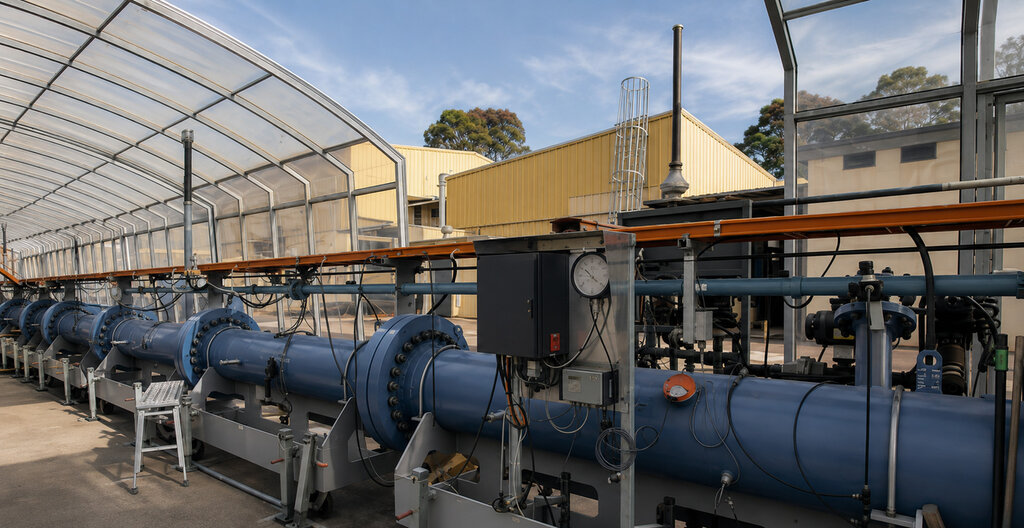
Main image: HazardProof audits and verifies hazardous area electrical installations across mining resources and other hazardous area installations sites in Queensland. Our work covers documentation, compliance against the AS/NZS 60079 series, and the dossiers that hold it all together.
Hazardous areas occur across many industries, including mining, oil and gas, chemicals, manufacturing, food processing, agriculture and energy. In mining operations, these risks may arise around fuel storage and handling, gas drainage systems, battery charging areas, workshops, process plants, coal handling infrastructure and other locations where flammable gases, vapours, liquids or combustible dusts may be present. Where these materials can form an explosive atmosphere, hazardous areas must be properly identified, classified, inspected and maintained, particularly where electrical equipment is installed. Equipment that is unsuitable for the classified zone, incorrectly installed, poorly maintained or inadequately documented can become an ignition source.
For mine operators, gaps in hazardous area documentation and records can create safety, maintenance, operational and assurance issues. A hazardous area audit helps identify compliance gaps and emerging risks before they become more difficult and costly to address.
A hazardous area is a location where flammable gases, vapours, mists, combustible dusts or fibres may be present in quantities that can create a fire or explosion risk. In these areas, electrical and mechanical equipment should be suitable for the area classification, installed correctly, maintained appropriately and supported by accurate records. Where equipment, processes or materials are changed, particularly where the replacement is not like-for-like, the hazardous area documentation and installation may need to be reviewed to confirm they still reflect the site and its current risks.
As Chris Mapleson, Co-Founder and COO of HazardProof, explains:
"Each record supports a specific part of hazardous area compliance. Classification drawings define the extent of the zones, equipment schedules help confirm that installed equipment is suitable for the area, and inspection and maintenance records help demonstrate that hazardous area equipment is being maintained and inspected in accordance with site requirements. Change records provide evidence that modifications have been reviewed and controlled."

Change records provide evidence that modifications have been reviewed and controlled.
Chris Mapleson, Co-Founder and COO of HazardProof
The challenge is keeping this information current as a site changes. When equipment, processes, materials or operating conditions are altered, the hazardous area classification, drawings, equipment records and verification dossier may need to be reviewed to confirm they still reflect the installation and its current risks.
"Hazardous area documentation usually does not fail all at once," says Mapleson. "It becomes unreliable over time when equipment changes are not recorded, inspections are not closed out, drawings are not updated, or changes to processes and materials are not properly reviewed."
For example, electrical equipment that is unsuitable for the classified zone, incorrectly installed or poorly maintained can create an ignition risk. At the same time, incomplete drawings, equipment registers, inspection records or verification dossier information can make it difficult to demonstrate compliance. These issues often only become visible during an audit, assurance review, insurance assessment, incident investigation or major project review.
A hazardous area audit provides a practical check of whether a site's classified areas, electrical installations, equipment, drawings and records still reflect current operations. It can identify gaps between the documentation and the actual installation, including issues that may affect equipment suitability, maintenance, inspection records or change control.
This helps site owners and operators understand whether the hazardous area classification, equipment, documentation and maintenance records remain aligned with the current installation. It also reduces uncertainty by turning incomplete or outdated compliance information into clear findings and practical actions.
"Good records make hazardous area maintenance and compliance easier to manage," says Mapleson. "They help show that equipment remains suitable for the classified area, inspections are being completed, and changes are being controlled. When a regulator, insurer, internal reviewer or corporate assurance team asks for evidence, the site needs records that match the actual installation."
If hazardous area drawings, equipment registers, inspection records or verification dossier information have not been kept up to date, a mine may be carrying compliance and operational risk that is not immediately obvious. A review or audit may be required when changes occur that could affect the hazardous area classification, equipment suitability, installation condition or supporting records, including:
- new plant, equipment or process changes;
- modifications or extensions to existing facilities;
- introduction of new chemicals, fuels, dusts, gases or materials;
- changes to ventilation, operating conditions, material quantities or release sources;
- hazardous area classification drawings that are outdated, missing or no longer reflect the installation;
- missing or incomplete equipment registers, inspection records or verification dossier information;
- new or replacement electrical equipment, particularly where the replacement is not like-for-like;
- findings from maintenance, inspection, incident investigation or safety review activities;
- commissioning, recommissioning or return-to-service of plant or assets.
The review process
A hazardous area review or audit typically starts with a review of the available documentation. This may include hazardous area classification drawings, operating information, maintenance records, electrical schematics, equipment schedules, inspection records and verification dossier information.
The site inspection then checks whether the installation reflects the documentation and current operating conditions. This includes reviewing whether hazardous area classifications remain representative, electrical equipment appears suitable for the classified area, equipment is correctly labelled and documented, and visible installation or maintenance issues are identified.
HazardProof provides engineering and electrical support across the life of a project. Some of that happens on site alongside your people, while additional support is offered remotely.
The findings are then assessed against the relevant standards and site information to identify gaps such as missing documentation, unsuitable or incorrectly installed equipment, incomplete inspection records, maintenance issues or areas where the hazardous area documentation no longer reflects the installation.
The final report should present clear findings, supporting evidence and practical recommendations. Actions can then be prioritised based on risk, compliance significance and the effort required to close out each item.
HazardProof supports clients by reviewing hazardous area documentation, site conditions and supporting records to identify practical compliance gaps. The aim is to reduce uncertainty by providing clear findings, evidence-based recommendations and actions that can be used for maintenance planning, change control and compliance close-out.
As Mapleson states:
"Our role is to help sites understand what they have, what has changed and what needs to be addressed. We review the hazardous area documentation, compare it against the installation, identify any gaps and provide practical actions that can be managed by the site."
Why customers trust HazardProof
With more than 80 years of combined hands-on site experience, HazardProof is a hazardous area and electrical engineering firm supporting clients across Australia. The team has practical experience in mining, live industrial sites and safety-critical environments, including underground coal, metalliferous mining, oil and gas, distilleries and manufacturing.
HazardProof’s hazardous area services support the full compliance lifecycle, from classification and design through to inspection, verification dossier development and review, intrinsic safety assessments, remediation planning and compliance close-out. Where required, HazardProof can also provide hazardous area audit support suited to the site, industry and applicable regulatory framework.

Most sites have the records somewhere. HazardProof works through them alongside your team, confirm what still matches the installation, and assists with what requires updating.
Combined with its broader electrical engineering capability, HazardProof’s advice is grounded in real site constraints and delivered by senior technical staff directly involved in the work. The focus is on practical actions that help clients understand what is compliant, what needs attention and how issues can be closed out in a manageable way. This approach combines the technical depth clients expect from a larger consultancy with the responsiveness and personal service of a specialist firm.